CBSE Class 10 Social Science Nationalism in India Important Questions 2027
Last updated:
33 questions from Nationalism in India (India and the Contemporary World-II) appeared in 7 of the 7 CBSE papers we analysed (2022–2026) — here are the topics that matter, the questions that repeat, and every previous-year question from this chapter.
Key facts
History - India and the Contemporary World-II unit — 20 marks in the official syllabus
Asked in 7 of 7 analysed papers (2022–2026)
About 4.7 questions per paper (OR alternatives counted separately)
3 question patterns repeated across papers
Important topics in Nationalism in India
#
Topic
Asked in
Importance
1
Map: locate Congress sessions and Satyagraha / movement sites
First World War, Khilafat and Non-Cooperation Movement
Board 2023Board 2024Board 2025
★☆☆☆☆
Repeated questions from Nationalism in India
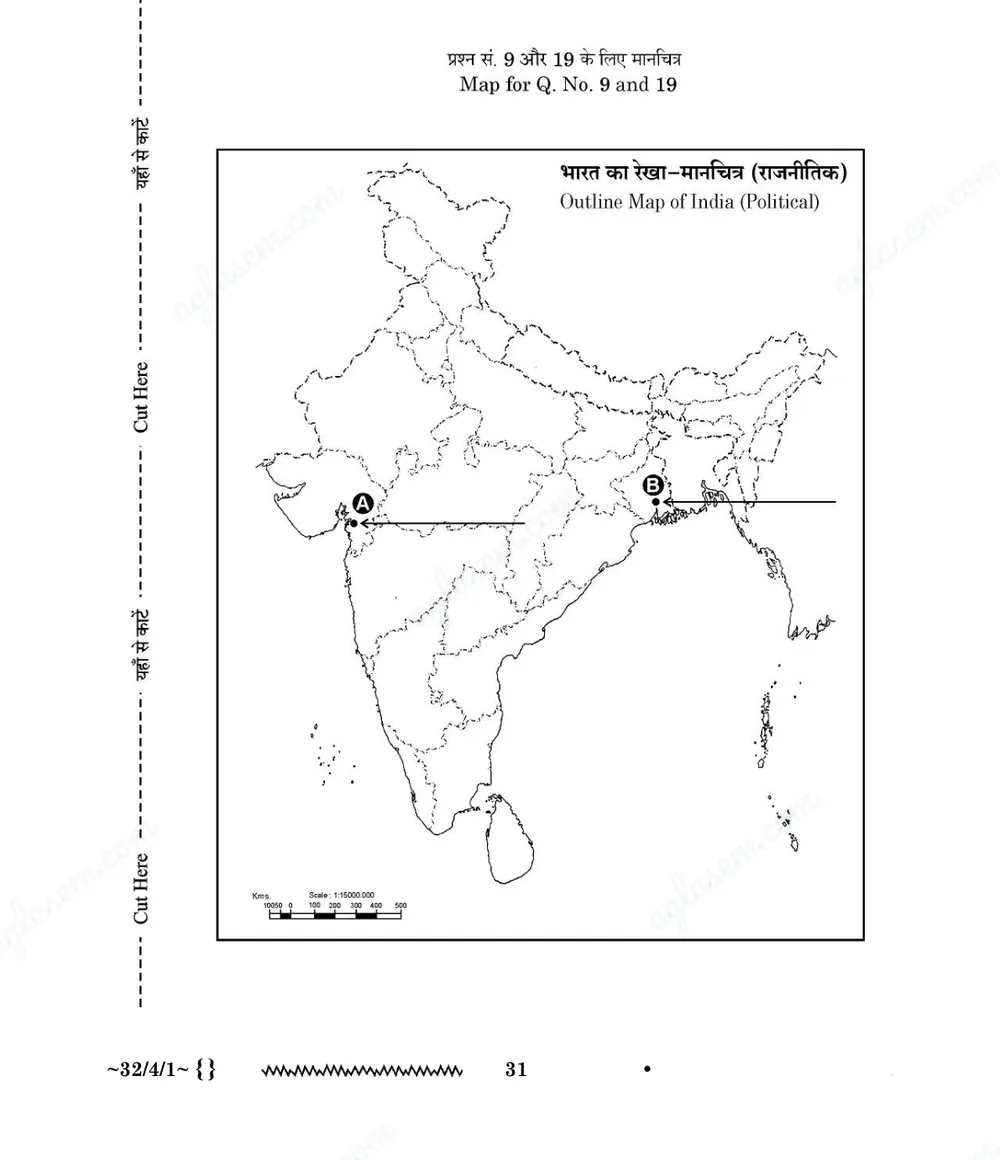
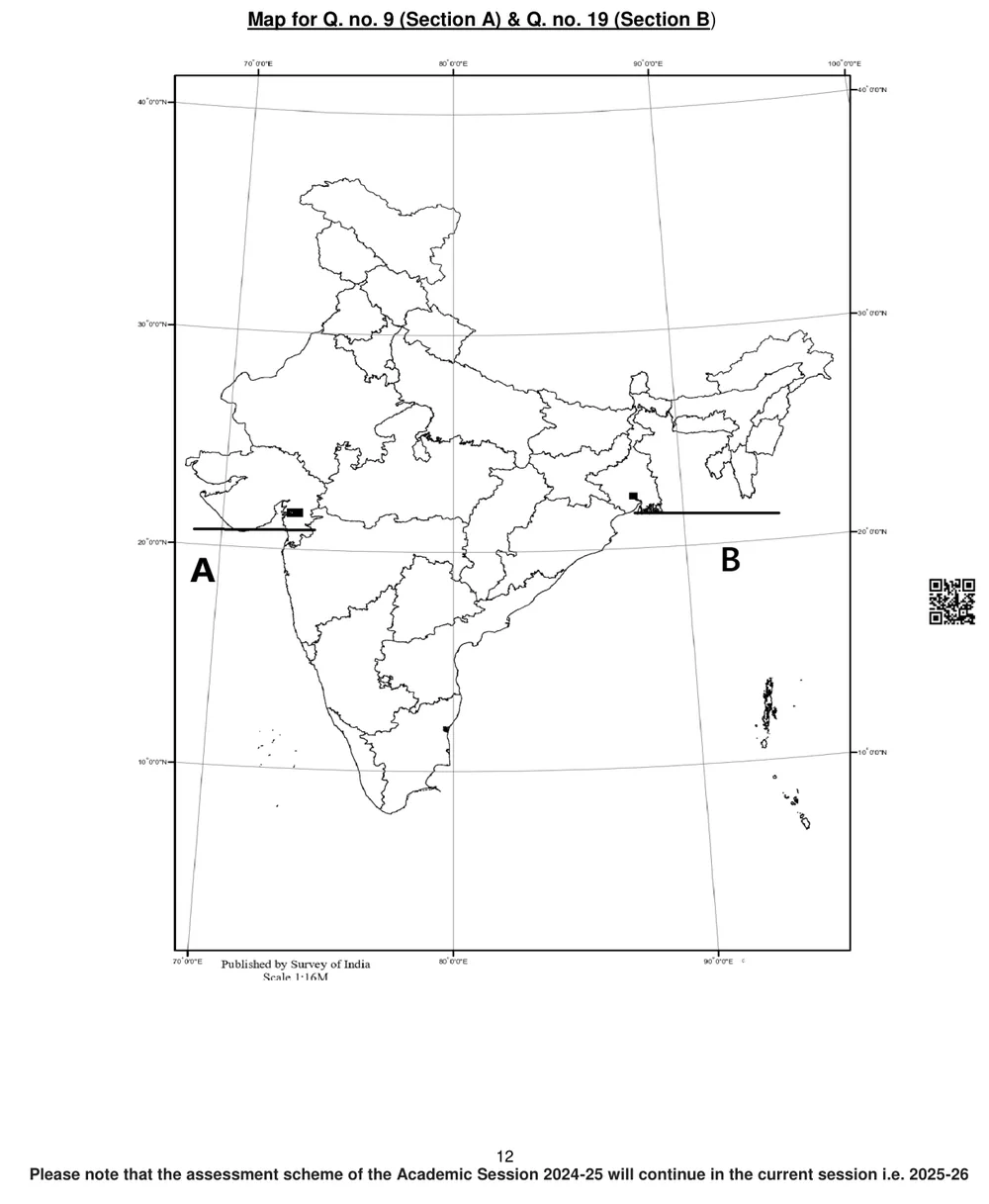
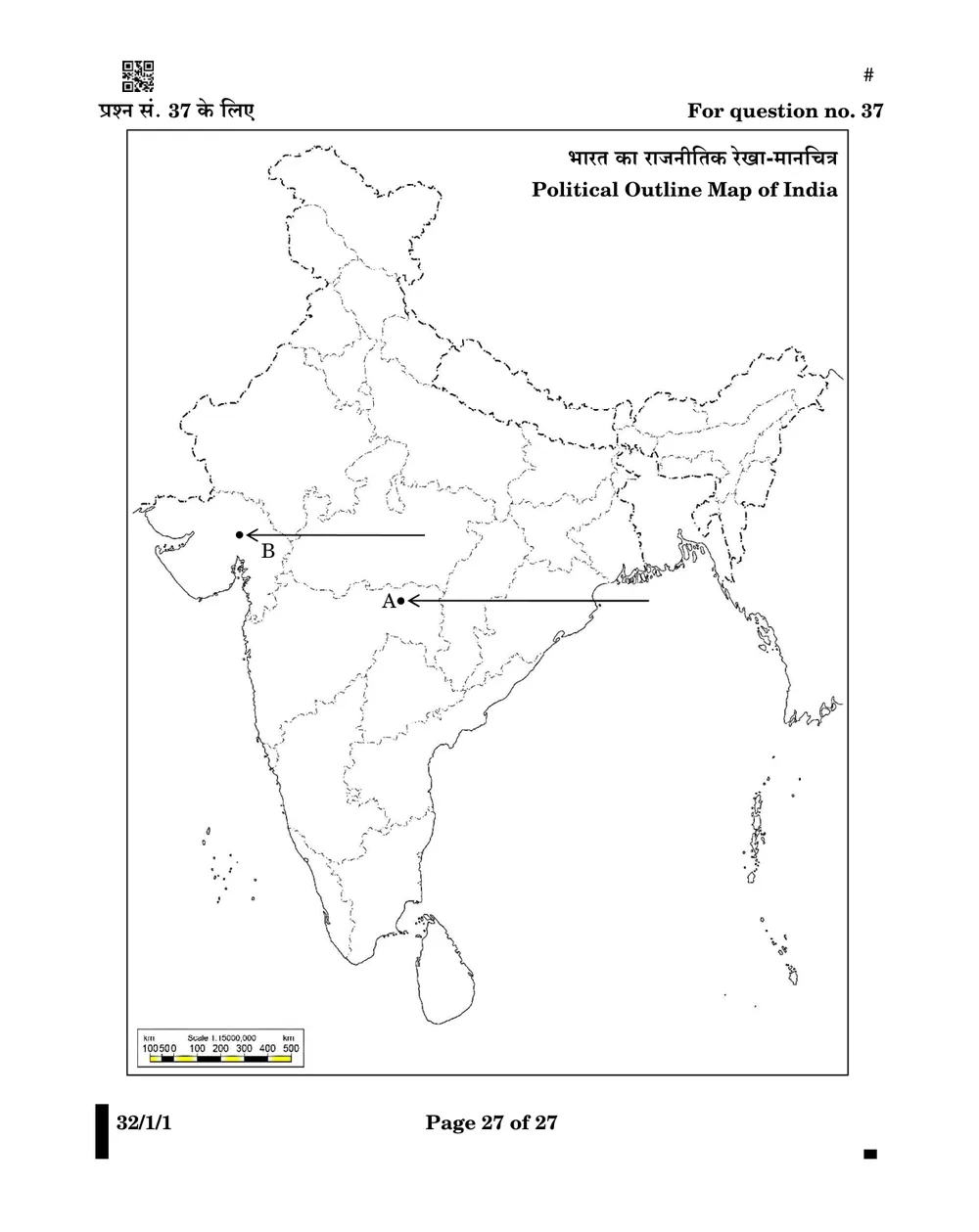
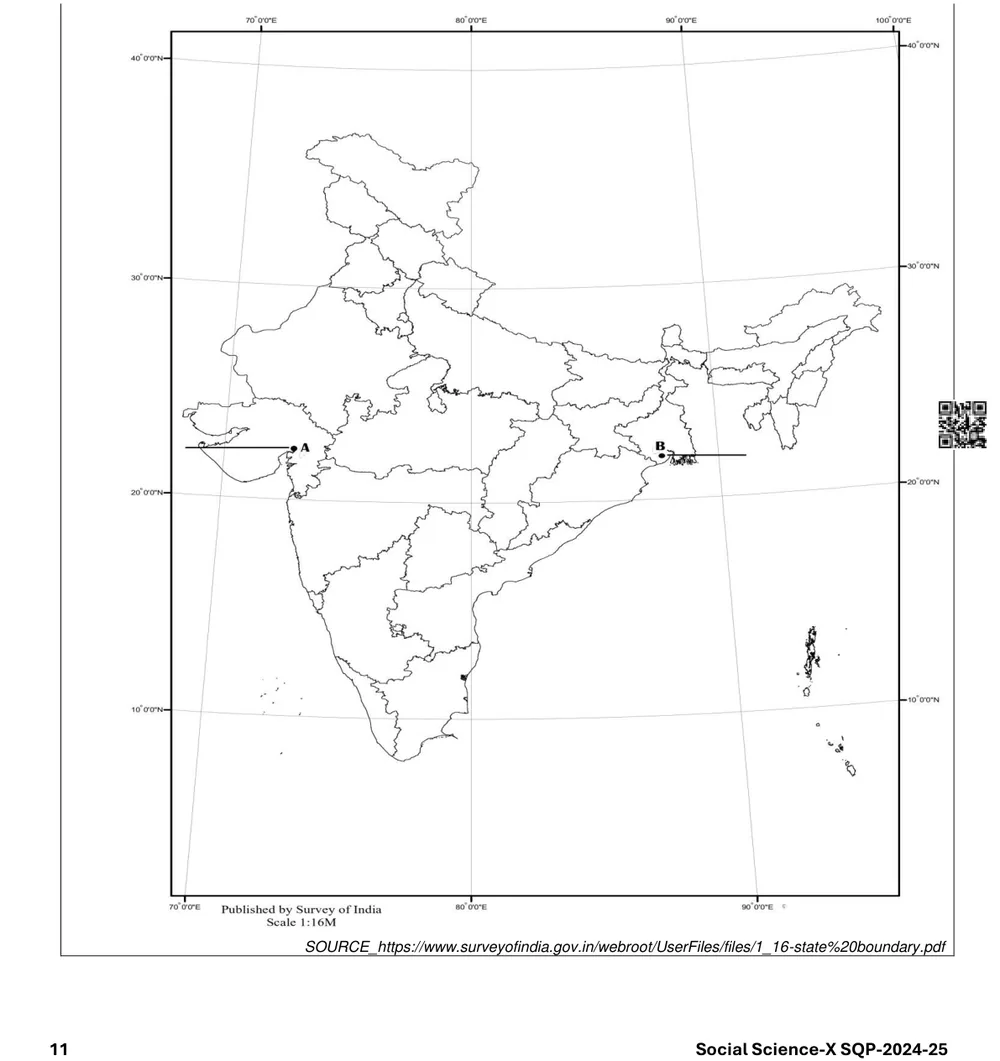
1. Map: identify INC session and Salt March/Satyagraha sites
7×Board 2022Board 2023Board 2024Board 2025Board 2026Sample 2025Sample 20261/2 marks
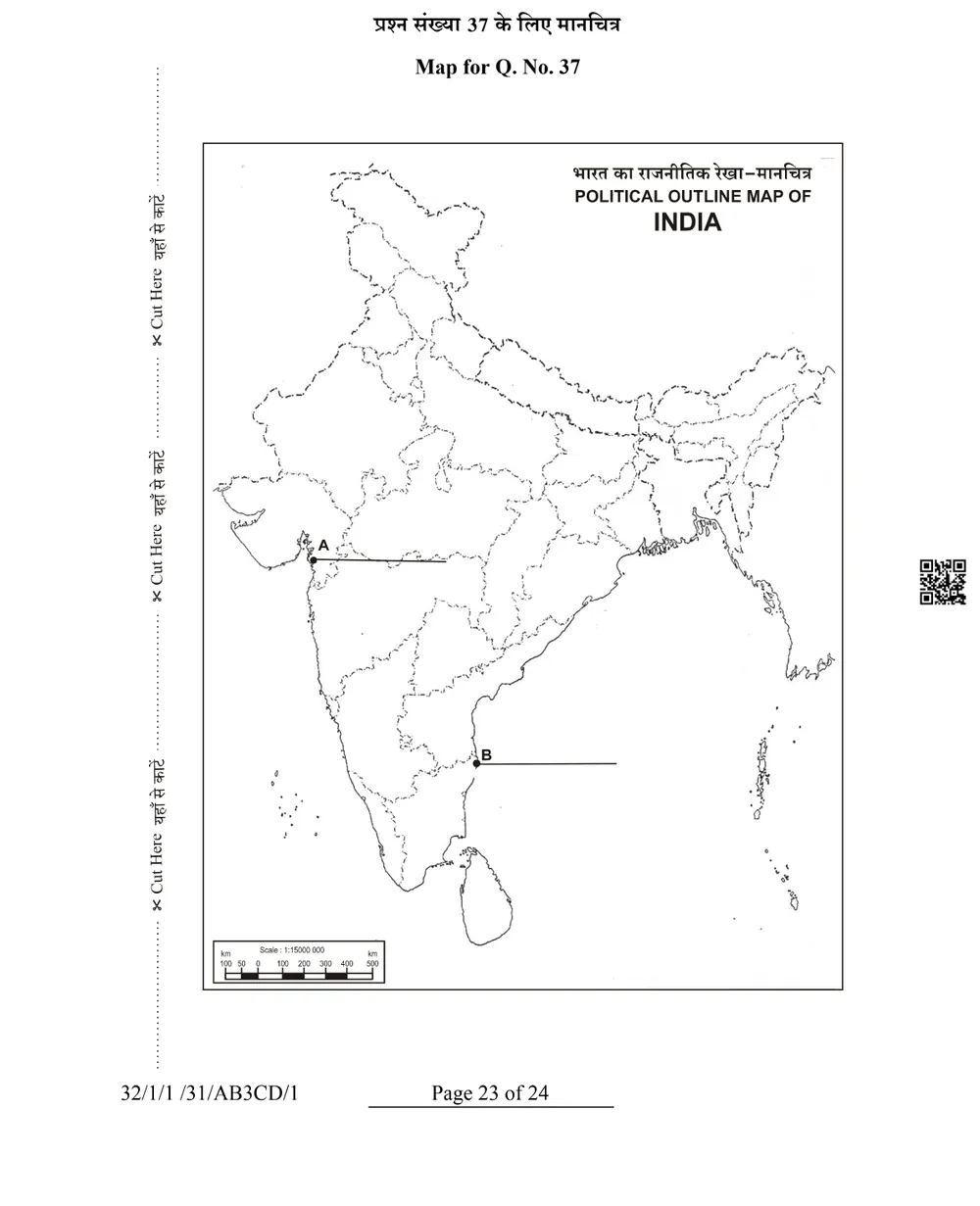
Two places 'A' and 'B' have been marked on the given political outline map of India. Identify them with the help of the following information and write their correct names on the lines drawn near them:
A. The place where Gandhiji broke the Salt Law.
B. The place where the session of Indian National Congress was held.
2. Role of folklore and culture in Indian nationalism
3×Board 2022Board 2023Sample 20263/5 marks
'A variety of cultural processes played an important role in developing a sense of nationalism in India'. Support the statement with suitable examples.
3. Chronological order of national-movement events
2×Board 2026Sample 20251 marks
Arrange the following events in chronological order and choose the correct option:
I. Second Round Table Conference
II. Formation of Depressed Class Association
III. Lahore Session of Indian National Congress
IV. Formation of Awadh Kissan Sabha
Options:
(A) I, II, IV, III
(B) I, II, III, IV
(C) IV, III, II, I
(D) IV, III, I, II
Nationalism in India questions by paper
Paper
Questions
Marks
Board 2022
7
11
Board 2023
3
12
Board 2024
4
9
Board 2025
5
11
Sample 2025
6
8
Board 2026
5
7
Sample 2026
3
8
Counts include both options of internal-choice (OR) questions.
Previous year questions: Nationalism in India
Board 2026 5 questions
Arrange the following events in chronological order and choose the correct option:
I. Second Round Table Conference
II. Formation of Depressed Class Association
III. Lahore Session of Indian National Congress
IV. Formation of Awadh Kissan Sabha
Options:
(A) I, II, IV, III
(B) I, II, III, IV
(C) IV, III, II, I
(D) IV, III, I, II
1 mark
[Source: Quit India Movement. The failure of the Cripps Mission and the effects of World War II created widespread discontentment in India. This led Gandhiji to launch a movement calling for complete withdrawal of the British from India. The Congress Working Committee, in its meeting in Wardha on 14 July 1942, passed the historic 'Quit India' resolution demanding the immediate transfer of power to Indians and quit India. On 8th August 1942 in Bombay, the All India Congress Committee endorsed the resolution which called for a non-violent mass struggle on the widest possible scale throughout the country. It was on this occasion that Gandhiji delivered the famous 'Do or Die' speech. The call for 'Quit India' almost brought the state machinery to a standstill in large parts of the country as people voluntarily threw themselves into the thick of the movement. People observed hartals, and demonstrations and processions were accompanied by national songs and slogans. The movement was truly a mass movement which brought into its ambit thousands of ordinary people, namely students, workers and peasants. It also saw the active participation of leaders, namely, Jayprakash Narayan, Aruna Asaf Ali and Ram Manohar Lohia and many women such as Matangini Hazra in Bengal, Kanaklata Barua in Assam and Rama Devi in Orissa. The British responded with much force, yet it took more than a year to suppress the movement.]
8.1 How did the failure of the Cripps Mission contribute to the launch of the Quit India Movement?
1 mark
[Source: Quit India Movement — see source passage in Q.8.] 8.2 Why was Gandhiji's call for 'the Quit India' considered historic?
1 mark
[Source: Quit India Movement — see source passage in Q.8.] 8.3 Explain the role of women in making the Quit India Movement more inclusive.
2 marks
Two places 'A' and 'B' have been marked on the given political outline map of India. Identify them with the help of the following information and write their correct names on the lines drawn near them:
A. The place where Gandhiji broke the Salt Law.
B. The place where the session of Indian National Congress was held.
2 marks
Sample 2026 3 questions
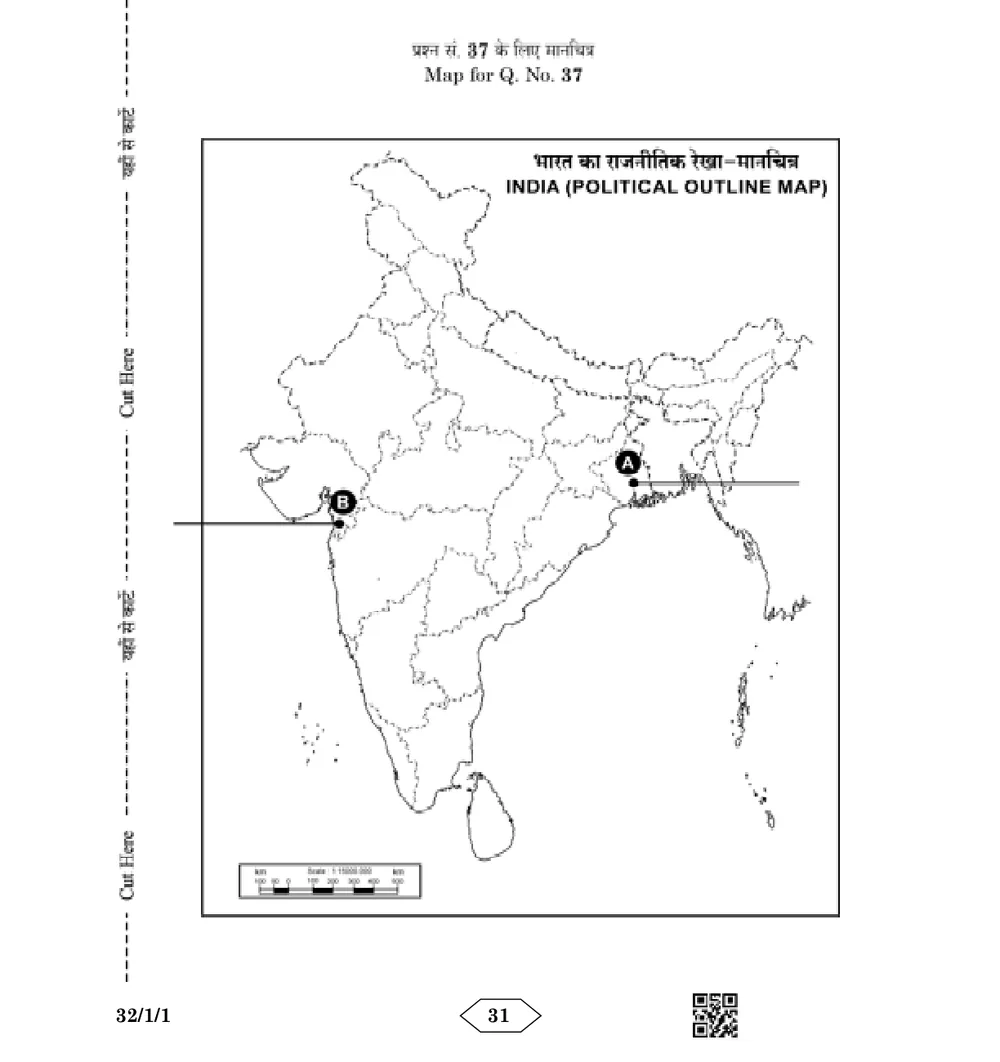
MAP SKILL-BASED QUESTION (2 marks): Two places A and B have been marked on the given outline map of India. Identify them and write their correct names on the lines marked on the map. (1+1=2) A) The place where the Civil Disobedience Movement was launched. B) The city where Indian National Congress session was held in September 1920. [Note: For Visually Impaired Candidates in lieu of Q.9 - A) The place where the Civil Disobedience Movement was launched. B) The place where Indian National Congress session was held in September 1920.]
2 marks
'A variety of cultural processes played an important role in developing a sense of nationalism in India'. Support the statement with suitable examples.
3 marks
Salt March 'became an effective tool of resistance against colonialism.' Analyse the statement with suitable reasons.
3 marks
Board 2025 5 questions
Explain the role of anti-colonial movement in the rise of 'modern nationalism' in India.
2 marks
Why did Gandhiji say 'Satyagraha is pure soul-force' ? Explain by giving two arguments.
2 marks
(34.3) Why did Gandhiji start a nationwide Satyagraha against the Rowlatt Act ? Explain any two reasons.
2 marks
Two places 'A' and 'B' have been marked on the given political outline map of India (on page 27). Identify them with the help of the following information and write their correct names on the lines drawn near them : A. The place where the session of Indian National Congress was held in 1920. B. The place where Gandhiji started Dandi March.
2 marks
"Tribal peasants interpreted the message of Mahatma Gandhi and the idea of 'Swaraj' in yet another way." Explain the statement in the context of Non-Cooperation Movement.
3 marks
Sample 2025 6 questions
Why did nationalists in late-nineteenth-century India focus on recording and preserving folklore?
(A) To create new forms of artistic expression that reflected modern India.
(B) To restore a sense of pride in traditional culture and national identity.
(C) To use folklore as a tool for economic development and modernization.
(D) To promote a uniform culture that could be adopted across all Indian regions.
1 mark
Arrange the following events in the correct chronological order leading up to the Civil Disobedience Movement:
1. Boycott of the Simon Commission
2. Poorna Swaraj resolution passed
3. Letter with 11 demands sent to Viceroy Irwin
4. Salt March
Options:
(A) 4, 3, 2, 1
(B) 2, 1, 3, 4
(C) 1, 4, 3, 2
(D) 1, 2, 3, 4
1 mark
[Source: Emboldened with this success, Gandhi ji in 1919 decided to launch a nationwide Satyagraha against the proposed Rowlatt Act (1919). This Act had been hurriedly passed through the Imperial Legislative Council despite the united opposition of the Indian members. It gave the government enormous powers to repress political activities, and allowed detention of political prisoners without trial for two years. Mahatma Gandhi wanted non-violent civil disobedience against such unjust laws, which would start with a hartal on 6 April.]
Why did the British introduce the Rowlatt Act?
1 mark
[Source: Emboldened with this success, Gandhi ji in 1919 decided to launch a nationwide Satyagraha against the proposed Rowlatt Act (1919). This Act had been hurriedly passed through the Imperial Legislative Council despite the united opposition of the Indian members. It gave the government enormous powers to repress political activities, and allowed detention of political prisoners without trial for two years. Mahatma Gandhi wanted non-violent civil disobedience against such unjust laws, which would start with a hartal on 6 April.]
How did Mahatma Gandhi respond to the Rowlatt Act? Provide one reason for his reaction.
1 mark
[Source: Emboldened with this success, Gandhi ji in 1919 decided to launch a nationwide Satyagraha against the proposed Rowlatt Act (1919). This Act had been hurriedly passed through the Imperial Legislative Council despite the united opposition of the Indian members. It gave the government enormous powers to repress political activities, and allowed detention of political prisoners without trial for two years. Mahatma Gandhi wanted non-violent civil disobedience against such unjust laws, which would start with a hartal on 6 April.]
Examine the effect of this Act on Indians.
2 marks
Two places A and B have been marked on the given outline map of India. Identify them and write their correct names on the lines drawn near them.
A. The place where the Peasant Satyagraha took place.
B. Indian National Congress session was held at this place in Sept. 1920.
2 marks
Board 2024 4 questions
Which one of the following pairs regarding Indian nationalism is correctly matched? (Leaders : Contribution) (a) Sardar Patel : Hindustan Socialist Republican Army (b) Bhagat Singh : Swaraj Party (c) C.R. Das : Bardoli Satyagraha (d) Jawahar Lal Nehru : Oudh Kisan Sabha
1 mark
Two places 'A' and 'B' have been marked on the given Political outline map of India. Identify them with the help of the following information and write their correct names on the lines drawn near them: (a) The place where Mahatma Gandhi broke the salt law. (b) The place where Session of Indian National Congress was held in 1927.
2 marks
Describe any three causes that led to the Non-Cooperation Movement.
3 marks
Describe any three causes of 'Civil Disobedience Movement.'
3 marks
Board 2023 3 questions
On the given political outline Map of India, two places (A) and (B) have been marked. Identify them with the help of given information and write their correct names on the lines drawn near them:
(A) The place where the session of INC was held in September, 1920.
(B) The place where Mahatma Gandhi broke Salt Law.
[Note for Visually Impaired Candidates, in lieu of the map: (37.1) Name the place where the session of INC was held in September, 1920. (37.2) Name the state where Gandhiji broke Salt Law.]
2 marks
Analyse the implications of First World War on the economic and Political situation of India.
5 marks
Analyse the role of folklore and symbols in the revival of nationalism in India during late 19th century.
5 marks
Board 2022 7 questions
[Source: The Independence Day Pledge, 26 January, 1930 - 'We believe that it is the inalienable right of the Indian people, as of any other people, to have freedom and to enjoy the fruits of their toil and have the necessities of life, so that they may have full opportunities of growth. We believe also that if any government deprives a people of these rights and oppresses them, the people have a further right to alter it or to abolish it. The British Government in India has not only deprived the Indian people of their freedom but has based itself on the exploitation of the masses, and has ruined India economically, politically, culturally, and spiritually. We believe, therefore, that India must sever the British connection and attain Purna Swaraj or Complete Independence.'] Why was freedom considered an inalienable right of the Indian people?
1 mark
Why was Purna Swaraj considered essential by the people of India?
1 mark
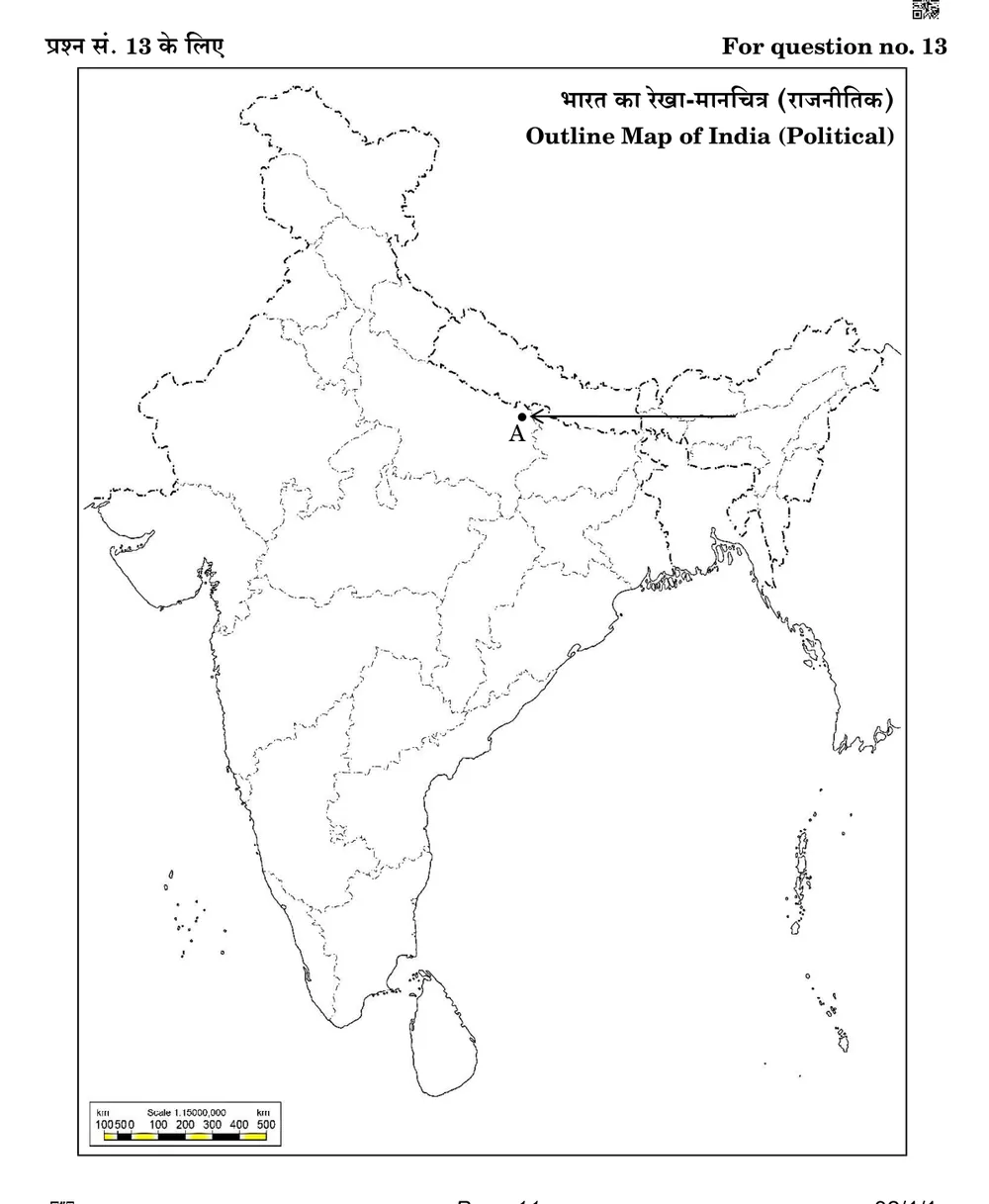
On the given political outline map of India (on page 11), identify the place marked as 'A' with the help of the following information and write its correct name on the line marked near it. A. The place where Non-Cooperation Movement was called off due to violence.
1 mark
(For Visually Impaired Candidates only, in lieu of Q. No. 13) Name the State where the session of Indian National Congress was held in 1927.
1 mark
Why did Indian merchants and industrialists support the Civil Disobedience Movement? Explain.
2 marks
Explain the significance of the Lahore Session of Congress (1930).
2 marks
"It was essential to preserve folk tradition in order to discover one's national identity and restore a sense of pride in one's past." Support the statement in reference to India.
3 marks
Frequently asked questions
What are the most important topics in CBSE Class 10 Social Science Nationalism in India?
By how often and how recently they were asked: Map: locate Congress sessions and Satyagraha / movement sites; Civil Disobedience Movement / Salt March; Participation of different social groups (peasants, workers, women, business).
How many marks does Nationalism in India carry in the CBSE Class 10 Social Science exam?
Nationalism in India is part of the History - India and the Contemporary World-II unit, which carries 20 marks in the official syllabus. In the analysed papers it had about 4.7 questions per paper.
Do questions from Nationalism in India repeat in board exams?
Yes — 3 question patterns from this chapter appeared in two or more past board or official sample papers. They are listed on this page with the years they were asked.