ISC Class 12 Sociology Important Questions 2027 (Repeated in Board Exams)
Last updated:
81 question patterns that appeared in two or more of the analysed papers (4 board + 5 official sample papers (2023–2027)). The numbers change; the question does not.
Social Institutions and Kinship
1. Identify the kinship usage from a description or scenario (MCQ)
6×Board 2023Board 2024Board 2025Sample 2025Sample 2026Sample 20271 marks
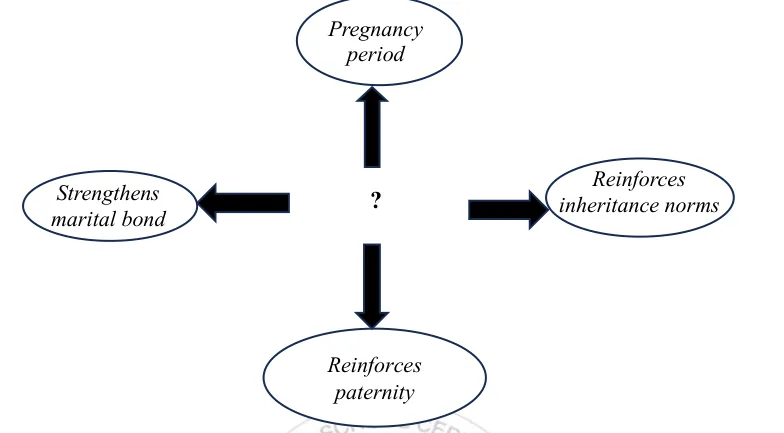
[flowchart: '?' at the centre with arrows to 'Pregnancy period', 'Strengthens marital bond', 'Reinforces inheritance norms' and 'Reinforces paternity']
The flowchart above represents different aspects of:
(a) Amitate
(b) Couvade
(c) Avunculate
(d) Teknonymy
2. Assertion-Reason on kinship usages (teknonymy, joking relationship, couvade, avoidance)
4×Board 2025Sample 2024Sample 2025Sample 20261 marks
Given below are two statements marked as Assertion and Reason. Read the statements carefully and choose the correct option.
Assertion: Avoidance has been prevalent in all forms of societies especially primitive communities.
Reason: As a social mechanism, avoidance prevents conflict especially in communities that are not governed by any written laws, by imposing strict behavioural norms on kin members.
(a) Both Assertion and Reason are true and Reason is the correct explanation for Assertion.
(b) Both Assertion and Reason are true but Reason is not the correct explanation for Assertion.
(c) Assertion is true and Reason is false.
(d) Both Assertion and Reason are false.
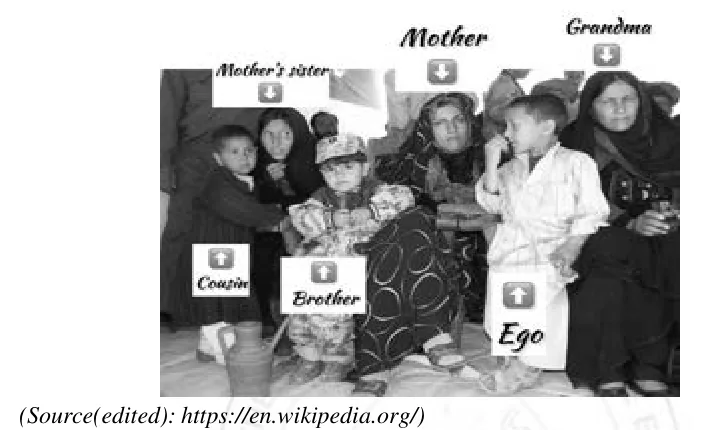
3. Explain degree of kinship and identify primary, secondary and tertiary kin
4×Board 2023Sample 2024Sample 2025Sample 20264 marks
Identify the examples of the three degrees of kinship from the image shown below. Discuss each of the three degrees briefly.
4. Identify the type of residence (matrilocal, patrilocal, avunculocal)
4×Board 2023Sample 2023Sample 20241 marks
Rani lives in the residence of her maternal uncle along with her brothers, sisters, maternal grandmother, mother, and maternal aunts.
The type of residence referred to here is ________.
5. Identify or define descriptive / classificatory kinship terms
4×Board 2023Board 2024Board 2025Sample 20261 marks
State one feature of Classificatory kinship terms.
6. Descriptive and classificatory kinship terms: meaning, features and examples
3×Board 2024Board 2026Sample 20244/6 marks
Ravi is doing a comparative study on kinship terminology used in two different communities, A and B. He makes the following observations about these communities:
- Community A: He finds that the same kinship term is used by ego to address father, father's sister's husband, and mother's brother.
- Community B: Separate kinship terms are used by ego to address mother, mother's sister and father's sister.
Briefly discuss the meaning of kinship term. What are the features of the type of kinship term practised in Community B?
7. Identify the type of descent (patrilineal, matrilineal, bilateral) (MCQ)
2×Board 2026Sample 20231 marks
Ramesh has two sons and one daughter. As per societal norms, his sons will inherit the land, while his daughter will become a part of her husband's lineage after marriage.
The type of descent illustrated in the above scenario is:
(a) Bi-lateral
(b) Patrilineal
(c) Matrilineal
(d) Matriarchal
8. Discuss the features of social institutions
2×Board 2025Board 20264/7 marks
Discuss any four features of Social Institutions.
9. Explain kinship usages: couvade, amitate, teknonymy
2×Board 2025Sample 20234 marks
Explain any two features each of Amitate and Teknonymy as kinship usages.
10. Explain joking relationship / avoidance as kinship usages
2×Board 2023Board 20264 marks
The kinship usage of Avoidance creates stability and social order in various communities. Justify the statement by giving four arguments and relevant examples.
Marriage
11. Monogamy: definition, features, functions and relevance
3×Sample 2023Sample 2025Sample 20264/7 marks
Discuss any seven features of Monogamy.
12. Exogamy: definition, features and functions
3×Board 2024Sample 2025Sample 20264/7 marks
Discuss any seven features of Exogamy.
13. Hypergamy and hypogamy: identify from a scenario
3×Board 2024Sample 2023Sample 20271 marks
Rita a qualified engineer from an upper-middle class family, chose to marry Srikant, a skilled electrician from a lower socio-economic group. Rita's relatives criticised her decision arguing that such a marriage would lower her family's prestige and social balance.
Choose the correct statements that explain the motivation for Rita's decision.
(P) She exercised her individual choice.
(Q) She was influenced by caste endogamy.
(R) Her decision was influenced by social movements.
(S) Her basis for selecting her spouse was 'shared understanding' among other factors.
(a) Only (P) and (Q)
(b) Only (P) and (S)
(c) Only (Q) and (R)
(d) Only (R) and (S)
14. Identify exogamy as the rule of marriage
2×Sample 2025Sample 20261 marks
'In a recent wedding in rural Maharashtra, the families consulted local elders and genealogical records before finalising the match. The bride and groom's lineage were traced back seven generations on the father's side and five on the mother's side to ensure that no common ancestor was shared within those limits.' (Source: tribuneindia.com)
With reference to the above case, identify the rule of marriage being followed.
15. Definition, functions and relevance of marriage
2×Sample 2025Sample 20264 marks
With the help of four arguments, comment on the relevance of Marriage as a social institution in present times.
16. Relevance of endogamy / marriage within the kin group
2×Board 2026Sample 20274 marks
Marriage within the same kin group where members are related by blood is often considered a 'systematic solution' to the needs of the community.
Do you agree with the above statement? Justify your answer with the help of four arguments.
17. Levirate and sororate: identify the rule of marriage (MCQ)
3×Board 2023Sample 2023Sample 20241 marks
Ravi lost his wife Seema after two years of marriage. He married Seema's younger sister Suman. What is this rule of marriage known as?
(a) Levirate
(b) Hypogamy
(c) Hypergamy
(d) Sororate
18. Polygamy (polyandry / polygyny): identify, features and merits (MCQ)
2×Board 2025Sample 20271 marks
An episode of 'Beyond Boundaries' aired on YouTube, titled 'Three Brothers, One Wife-Inside India's Rare Marriage Tradition', begins with the story of Kiran who is married to three brothers at the same time. This traditional marriage practice known as 'Jajda' is followed by the Hatti tribe of Himachal Pradesh where polyandry is common.
Which one of the following is the MOST appropriate justification for the form of marriage referred to above?
(a) To reduce jealousy
(b) To create large families
(c) To manage family assets
(d) To clearly define paternity and parental roles
19. Polygamy (polyandry / polygyny): identify, features and merits (one-mark)
2×Board 2023Sample 20261 marks
State any one feature of Polygyny.
20. Cousin marriage (cross and parallel): identify and state features (MCQ)
2×Board 2026Sample 20231 marks
Gayatri's marriage was arranged with her father's sister's son as marriages in her community were arranged within the same kin group.
Choose the correct statements that explain the reasons for Gayatri's marriage alliance with her cousin.
(P) These marriages widen the kinship network.
(Q) Such marriages are widespread in all societies.
(R) These marriages help strengthen familial bonds.
(S) These marriages maintain purity of the bloodline.
(a) Only (P) and (Q)
(b) Only (R) and (S)
(c) Only (P) and (R)
(d) Only (Q) and (S)
21. Cousin marriage (cross and parallel): identify and state features (one-mark)
2×Board 2024Board 20251 marks
Marriage in some societies is governed by certain preferential rules.
In this context, mention any one feature of cousin marriage.
Family
22. Changes in the joint family: factors, urbanisation and social change
4×Board 2023Sample 2024Sample 2026Sample 20274/7 marks
The relationship between Joint family Systems and Social Change and Development is an inverse one. Comment on the statement with the help of relevant examples.
23. Features of family as given by MacIver
4×Board 2023Sample 2024Sample 2025Sample 20264/7 marks
Comment on the relevance of MacIver's idea of family as a social unit by referring to any four features of his theory.
24. Consanguineous vs conjugal family: identify and differentiate (one-mark)
4×Board 2023Board 2024Sample 2023Sample 20251 marks
State any one difference between Consanguineous and Conjugal families.
25. Small family norm: merits and positive impacts
2×Board 2026Sample 20274 marks
'Small family, big dreams.'
Do you agree with the above slogan? Justify your answer with the help of four arguments.
26. Explain four functions of family
3×Board 2024Board 2026Sample 20234 marks
Discuss any four functions of Family.
27. Joint family vs nuclear family: features and comparison
2×Board 2025Sample 20254/7 marks
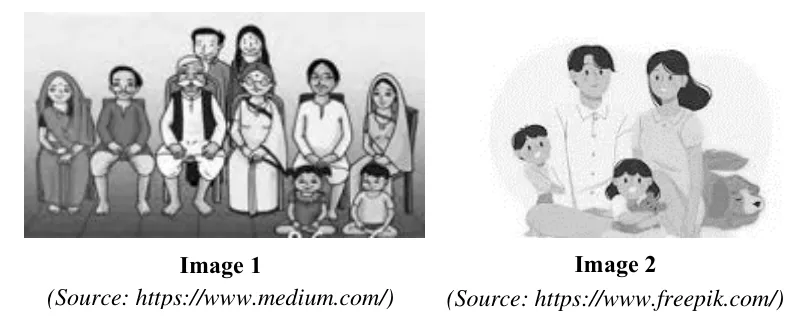
[image 1: a large joint family of three generations; image 2: a small nuclear family]
The two images shown above represent two family forms. Which one is characteristic of urban societies? Justify your answer with the help of six reasons.
Religion and Society
28. Totemism: identify from an example and explain features (one-mark)
3×Sample 2025Sample 2026Sample 20271 marks
Analyse the relationship between the first pair and complete the analogy.
Moral Code: Ensures social conformity :: Totemism: ________
29. Functional theories of religion (Durkheim, Malinowski, Radcliffe Brown)
4×Board 2024Sample 2023Sample 2025Sample 20264/5/7 marks
With reference to Durkheim's theory of religion, discuss how religion establishes harmony and stability in society.
30. Theories of religion: animism (Tylor) and naturism (Max Mueller)
3×Board 2023Sample 2024Sample 20274/7 marks
Summarise Max Mueller's theory of Naturism in Religion.
31. Positive functions / impacts of religion on human society
2×Sample 2025Sample 20264 marks
Explore any four positive impacts of religion on human society.
32. Explain superstition and taboo and their relevance/functions
2×Board 2025Sample 20274/7 marks
Describe four functions of Superstition in religion.
33. Belief and ritual as components of religion
2×Board 2024Sample 20274/7 marks
Summarise features of Belief in Religion.
34. Morality, social control, moral code and religious code
2×Board 2024Sample 20262/4 marks
How do social control measures reinforce morality in society?
35. Identify taboo / superstition / belief / ritual from a description (MCQ)
2×Board 2024Sample 20251 marks
Certain individuals are forbidden from entering some places of worship.
The concept of religion that forbids them is:
(a) Superstition
(b) Ritual
(c) Belief
(d) Taboo
36. Identify taboo / superstition / belief / ritual from a description (one-mark)
2×Board 2025Sample 20231 marks
Every morning Ravi hangs a bunch of green chillies and lemons at the entrance of his house to ward off evil spirits.
Which concept of religion does Ravi practise?
37. Religion and science: differences, similarities and correlation
2×Board 2024Board 20264/7 marks
Explain the correlation between Religion and Science with the help of relevant examples.
38. Explain four dysfunctions of religion
2×Board 2023Sample 20244 marks
Religion performs both positive and negative functions in a society. With respect to the given statement, explain any four dysfunctions of religion.
Political Organization
39. 73rd Constitution Amendment Act and empowerment of women
3×Board 2023Board 2026Sample 20244/5 marks
Discuss any four ways in which the 73rd Constitution Amendment Act has empowered women in India.
40. Identify the Bal Panchayat (children's council) from a scenario (one-mark)
3×Board 2023Board 2025Sample 20241 marks
[context: a ten-year-old girl from Banipur village describes a weekly council made up only of children (aged 10-15) that launched a campaign against polythene bags after stray cattle died eating them]
Which council is being referred to by the narrator?
41. Role of Bal Panchayats in the lives of children and social change (case/passage-based)
2×Board 2025Sample 20265/6 marks
[context: children's council helps re-enrol a child labourer in school]
Assess the role of political organisations like the children's council in bringing about social change.
42. Role of Bal Panchayats in the lives of children and social change (MCQ)
2×Board 2026Sample 20251 marks
Given below are two statements marked Assertion and Reason. Read the two statements carefully and choose the correct option.
Assertion: Bal Panchayats ensure democratic participation of children in local governance.
Reason: Children contact the members of the local panchayat and engage in constructive dialogues with them to seek accountability and action on various issues.
(a) Both Assertion and Reason are true and Reason is the correct explanation for Assertion.
(b) Both Assertion and Reason are true but Reason is not the correct explanation for Assertion.
(c) Assertion is true and Reason is false.
(d) Both Assertion and Reason are false.
43. Define Panchayati Raj / local self-government
2×Board 2023Sample 20242 marks
Define panchayati raj.
Economic Organisation
44. Free goods and economic goods (one-mark)
3×Board 2023Sample 2024Sample 20261 marks
Analyse the relationship between the first pair and complete the analogy.
(a) Free goods: Gifts of Nature :: ________: Command a price
(b) Consanguineous kinship: Blood ties :: Affinal kinship: ________
45. Economies of Indian tribes (food gathering, pastoralism, handicrafts) (MCQ)
2×Sample 2025Sample 20261 marks
The Rabaris are an indigenous tribe of nomadic cattle and camel herders and shepherds that live throughout northwest India. Moving mainly through the regions of Rajasthan and Gujarat, they go back to their village once a year and make their living by selling milk.
Which type of economic activity does the Rabari tribe engage in for a living?
(a) Shifting axe cultivation
(b) Food gathering
(c) Pastoralism
(d) Handicrafts
46. Agrarian economic structure: owner, tenant and sharecropper (one-mark)
2×Sample 2025Sample 20261 marks
Briefly explain the term sharecropper with reference to the agrarian economic structure.
47. Jajmani system: identify, characteristics and merits
2×Sample 2025Sample 20264 marks
The Jajmani system should be revived to bring back stability in rural livelihoods.
Do you agree with the statement? Justify your answer by giving four reasons.
48. Agrarian economic structure: owner, tenant and sharecropper (MCQ)
3×Board 2023Board 2025Sample 20241 marks
In the context of traditional agrarian economy in India, which one of the following statements describes the relationship of owners with tenants and sharecroppers?
(a) Owners manage the land while tenants and sharecroppers collectively own the land.
(b) Owners cultivate the land themselves while tenants pay a fixed fee for land use and sharecroppers own the land they work on.
(c) Tenants manage the land and pay a portion of the produce to owners while sharecroppers lease the land and pay rent to the owners.
(d) Owners lease the land to tenants who pay rent to them while sharecroppers work on the land and share the produce with the owner.
49. MGNREGA: features, implications and effectiveness
3×Board 2023Board 2025Sample 20244 marks
The Parliament of India implemented a social welfare measure in 2005, which aimed at ensuring the livelihood and economic security of rural households across the country. It guaranteed at least hundred days of wage employment to families in rural areas.
Name the programme of rural employment being referred to above. Comment on any three of its implications.
50. Jajmani system: identify, characteristics and merits (one-mark)
2×Board 2024Sample 20271 marks
The carpenter, potter, weaver and barber, who were all known as Kamins, provided specialised services to Manimohan, the village landlord. In return, he provided them agricultural produce and took care of their basic needs.
Which system of exchange relations is highlighted in the above situation?
51. Economies of Indian tribes (food gathering, pastoralism, handicrafts) (one-mark)
2×Board 2026Sample 20231 marks
Analyse the relationship between the first pair and complete the analogy.
(a) Food gathering: Collecting fruits and honey :: ________: Basket weaving and pottery
(b) Matrilocal: Residence with mother's family :: Patrilocal: ________
52. Identify barter exchange from an example (MCQ)
2×Board 2023Sample 20241 marks
Barter exchange involves an exchange of goods between individuals or groups.
Which one of the following is an example of Barter Exchange?
(a) A sharecropper giving a part of his produce to a landowner.
(b) A farmer cultivating on zamindar's land and repaying him in cash.
(c) A farmer exchanging a sack of wheat for a pair of shoes from a shoemaker.
(d) A farmer buying cattle in a weekly market.
53. Shifting axe cultivation: drawbacks and reasons for ban
2×Board 2024Sample 20234 marks
Tribes in India used to practise a particular form of agriculture which was banned later by the government. Identify this method of agriculture and discuss any three reasons for it being banned.
54. Weekly markets (haats): concept and sociological importance
2×Board 2024Sample 20234/7 marks
Discuss any seven points illustrating the significance of the Weekly Market in rural India.
Tribal India
55. Definition and features of tribe
4×Board 2024Sample 2023Sample 2025Sample 20264 marks
Discuss any four features of Tribes.
56. Dormitories: identify and explain their functions (MCQ)
2×Sample 2025Sample 20261 marks
Mahi lives in a communal residence with other young members of her tribe. Her village also has similar communal residences for widows and widowers. All the members residing there learn about their tribal practices and are inducted into the tribal way of life. This communal residence imparts a knowledge of tribal values and culture to the youth.
Choose the correct statements that describe the residence that Mahi inhabits.
(P) Mahi lives in a joint family.
(Q) She lives in a dormitory.
(R) She inhabits Avunculocal residence.
(S) It acts as a centre for socialisation and education of the youth.
(a) Only (P) and (Q)
(b) Only (Q) and (R)
(c) Only (R) and (S)
(d) Only (Q) and (S)
57. Economic problems of tribes in India
3×Board 2023Board 2026Sample 20242/4 marks
List any two economic problems of tribes in India.
58. Government policies for tribal upliftment (Tribal Panchsheel etc.) (one-mark)
3×Board 2023Sample 2023Sample 20241 marks
The five principles of the policy introduced by the Indian government for the tribal communities aimed at promoting self-governance and development.
Which policy is being referred to?
59. Political problems of tribes: regionalism and separatism (MCQ)
2×Board 2026Sample 20261 marks
Identify the scenario that reflects Regionalism.
(a) The Women's Suffrage Movement in the US campaigned for women's rights to vote.
(b) Catalan Independence Movement in Spain advocates for the independence of Catalonia region from Spain to form a distinct nation.
(c) The Gorkhaland Movement in West Bengal demands the creation of a separate state in India for the Gorkha people of Darjeeling.
(d) The Amma Kodavas in Karnataka followed strict vegetarianism, wore the sacred thread and adopted many Brahminical rituals to move up in the social hierarchy.
60. Dormitories: identify and explain their functions
2×Board 2025Sample 20234 marks
Explain any four functions of the dormitories in tribal communities.
61. Social problems of tribes in India
2×Board 2023Sample 20244 marks
Briefly discuss any four social problems of tribes in India.
Social Stratification: Class and Caste
62. Divine Origin theory of caste
5×Board 2023Sample 2024Sample 2025Sample 2026Sample 20274/5/7 marks
According to the Kumbaras, a caste of potters from Karnataka, their origin is from the Creator. They firmly believe that they are the only ones who can produce unique clay items such as idols of deities and oil lamps which are used for religious and cultural occasions in that region.
With reference to the above case, discuss the theory of origin of caste being referred to.
63. List the four castes in order of hierarchy
2×Sample 2025Sample 20262 marks
List four castes in India according to the order of hierarchy.
64. Features / elements of social stratification
3×Board 2023Sample 2023Sample 20244 marks
The distinct vertical layers found in rocks are called stratification, and help one understand the divisions and layers. Discuss how this concept can be applied to a study of society.
65. Social mobility: sanskritisation and westernisation (MCQ)
2×Board 2025Sample 20261 marks
Read the following scenarios and select the process that reflects Westernisation.
(a) Members of a low caste group imitated the lifestyle of the upper caste as they wanted to rise in the social hierarchy.
(b) A group of Indians discarded the use of Indian clothes in favour of formal English attire as they considered it a mark of social mobility.
(c) In remote areas of Karnataka, the lifestyle of Brahmins was imitated by members of other castes to gain upward social mobility.
(d) A large part of the urban population prefers eating meals at Mc Donald's to traditional food items at Indian restaurants.
66. Class vs caste: achieved and ascribed status, differences (one-mark)
2×Sample 2024Sample 20251 marks
Soumen migrated from his village to a city in search of a job. Though he was a Vaishya by birth, he soon realised that the status an individual earned in the city was on the basis of skills, abilities and efforts.
With reference to the above case, identify the system of social stratification that Soumen experienced in the city.
67. Caste: meaning, the four varnas and features (one-mark)
2×Board 2023Sample 20261 marks
Slavery in the 17th century in USA was a system of hierarchy based on race and ethnicity that did not allow social mobility and social relationships in society.
Which hierarchical arrangement of individuals and groups with distinct social layers prevented social mobility and social relationships?
68. Class vs caste: achieved and ascribed status, differences (MCQ)
2×Board 2025Board 20261 marks
Given below are two statements marked Assertion and Reason. Read the two statements carefully and choose the correct option.
Assertion: Wealth, occupation and education determine class which is an achieved status.
Reason: Class, like caste, does not allow for social mobility.
(a) Both Assertion and Reason are true and Reason is the correct explanation for Assertion.
(b) Both Assertion and Reason are true but Reason is not the correct explanation for Assertion.
(c) Assertion is true and Reason is false.
(d) Both Assertion and Reason are false.
69. Caste: meaning, the four varnas and features (MCQ)
2×Board 2023Sample 20241 marks
In this social system, occupations were determined by birth. While those at the top of the hierarchy performed priestly functions, the ones immediately below them were the rulers and warriors. Below the warriors, the landowners and merchants were placed. Those who performed the unclean tasks were at the bottom of the hierarchy.
Identify this system of stratification.
(a) Caste system
(b) Types of Races.
(c) Kinship usages.
(d) Tribal economies.
70. Caste: meaning, the four varnas and features
2×Board 2024Sample 20234/7 marks
Raghu and Ranjan live in the same locality and work in the same factory. Raghu is a Brahmin and Ranjan is a Vaishya. Though they have known each other for many years, they try to maintain a social distance.
In the light of the given situation, identify the system of stratification. Discuss any three features of this system.
Gender
71. Impact of patriarchy and gender bias on men and women
3×Board 2026Sample 2025Sample 20274/7 marks
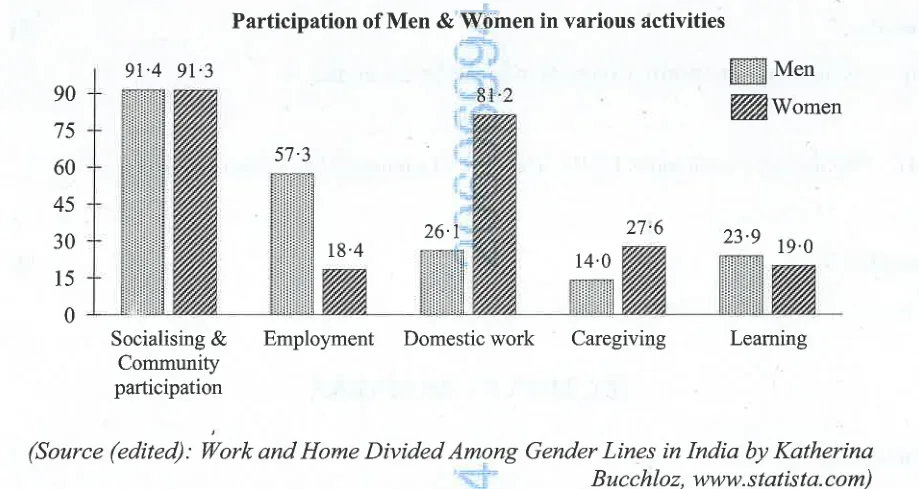
The graph given below depicts the results of the survey conducted by National Sample Survey in 2023 on the participation of men and women in various activities in a day in India. Study it carefully and answer the question that follows.
[Bar graph - Participation of Men & Women (%): Socialising & community participation 91.4 / 91.3; Employment 57.3 / 18.4; Domestic work 26.1 / 81.2; Caregiving 14.0 / 27.6; Learning 23.9 / 19.0]
Compare the participation of men and women in 'Employment' and 'Domestic Work'. How does gender bias affect their participation in these activities?
72. Identify patriarchal ideology
3×Board 2024Sample 2023Sample 20271 marks
'In the remote village of a state in India, women rarely owned land or handled money, even though they worked on family farms for long hours. Any attempt by women to question decisions was labelled as disrespectful and damaging to family honour. Men continued to dominate social, economic, and political spheres.' (Source: themint.com)
Name the ideology reflected in the above scenario.
73. Identify and explain gender issues (dowry, foeticide, domestic violence) (one-mark)
2×Board 2025Board 20261 marks
Though this practice is banned in the subcontinent, the cultural preference for a male child often leads to selective elimination of the unborn female child.
Identify the gender issue highlighted above.
Social Change and Development
74. Right to Education (RTE) Act: implications and effectiveness
4×Board 2023Sample 2024Sample 2025Sample 20264 marks
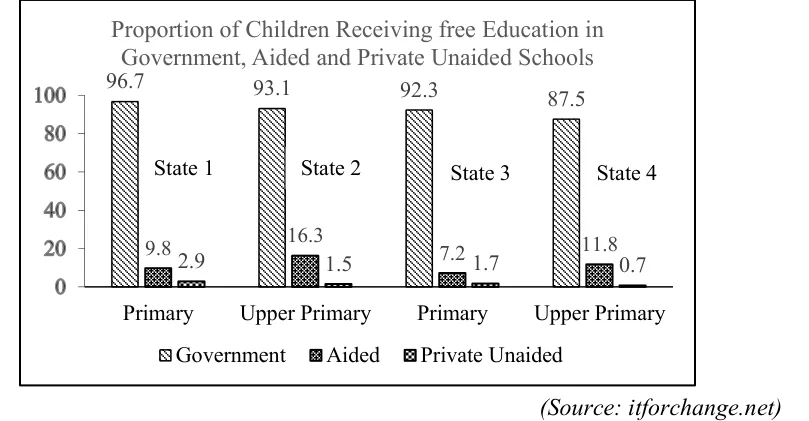
The graph given below depicts the results of the study done to assess the implementation of Right to Education (2009) in Government, Aided and Private Unaided schools in four states in India. Study the graph and answer the question that follows:
[Bar graph - Proportion of children receiving free education (Government / Aided / Private Unaided): State 1 Primary 96.7 / 9.8 / 2.9; State 2 Upper Primary 93.1 / 16.3 / 1.5; State 3 Primary 92.3 / 7.2 / 1.7; State 4 Upper Primary 87.5 / 11.8 / 0.7]
Analyse the effectiveness of Right to Education in addressing the disparity in education.
75. Identify the aspect of development (urbanisation, industrialisation, modernisation, globalisation) (one-mark)
5×Board 2023Board 2024Board 2025Board 2026Sample 20241 marks
Anshul works and lives in Ahmedabad. He wants to buy a television set and decides to wait for the discounts offered during 'Black Friday' sale. This sale is an American shopping tradition that has evolved from the local markets in the US and has spread to other countries.
Which aspect of development does the above scenario reflect?
76. Sustainable development and maintaining ecological balance
2×Board 2025Sample 20274/7 marks
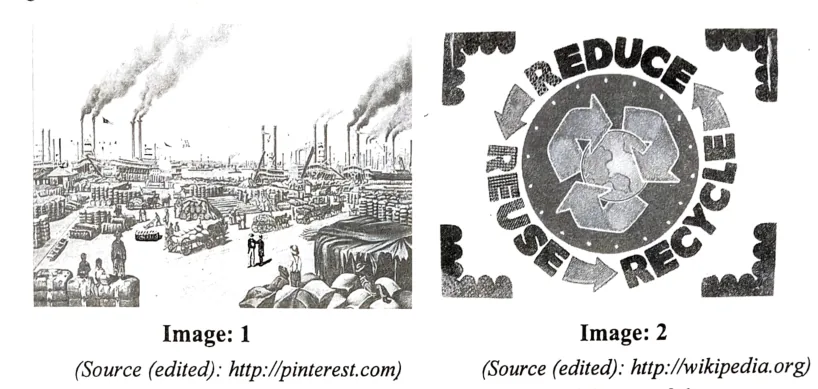
[image 1: industrial city with factories and chimneys; image 2: Reduce-Reuse-Recycle symbol]
Identify the two aspects of development shown above. Which one of these supports conservation of resources for the future generation?
Justify your answer with the help of any five arguments.
77. Social movements: meaning, role and trends (one-mark)
2×Board 2024Sample 20271 marks
[context: table of number of protests by region, 2006-2010 / 2011-2015 / 2016-2020 - Europe & Central Asia 119/319/368; Latin America & Caribbean 92/164/171; North America 44/111/126; South Asia 26/37/38; Sub-Saharan Africa 76/138/155; Global protests 68/83/88; Total 425/852/946]
What does the above data reveal about the trend of social movements across the world?
78. Mass media: positive and negative aspects and social responsibility (one-mark)
2×Board 2023Sample 20241 marks
Give any one negative aspect of Mass Media.
79. Discuss four sources of social change (case/passage-based)
2×Board 2023Sample 20244 marks
[context: passage on Mumbai's urban growth and its environmental problems]
Discuss any four sources of Social Change.
80. Sustainable development and maintaining ecological balance (case/passage-based)
2×Board 2023Sample 20242 marks
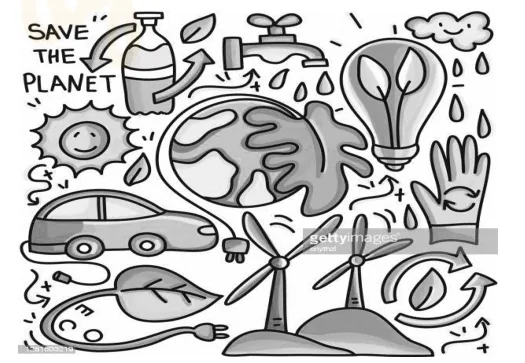
[context: passage on Mumbai's urban growth and its environmental problems; 'Save the Planet' image showing renewable energy, recycling, water saving]
With reference to the image given below, suggest how a city's ecological balance can be maintained.
81. Role and functions of education in social change
2×Board 2024Sample 20234/7 marks
Discuss any four points to highlight the role of Education in bringing about social change.