ISC Class 12 Political Science Important Questions 2027 (Repeated in Board Exams)
Last updated:
68 question patterns that appeared in two or more of the analysed papers (4 board + 4 official sample papers (2023–2027)). The numbers change; the question does not.
Forms of Government
1. MCQ: distinctive feature of a federal / unitary state
5×Board 2023Board 2026Sample 2023Sample 20271 marks
Identify the authoritative source used in the U.S to allocate and divide powers between the federal and the state governments?
(a) The President of the United States
(b) The Constitution of the United States
(c) The Congress and the state legislatures
(d) The Supreme Court of the United States
2. 1-mark: features of parliamentary vs presidential government (ministerial responsibility, real executive)
5×Board 2023Board 2026Sample 2023Sample 2024Sample 20251 marks
A parliamentary system is so called because in such a system, the real executive is embedded in the __________.
3. Differences between Parliamentary and Presidential forms of government
3×Board 2024Board 2026Sample 20274 marks
Contrast the relationship between the Executive and the Legislature in the political systems of India and the United States.
4. Identify the authoritarian state from its description (1 mark)
2×Sample 2025Sample 20271 marks
A state allows limited private economic activity and does not seek to control citizens' personal beliefs. It strictly suppresses political opposition and concentrates power in the executive.
This political system is BEST categorised as:
(a) Communist
(b) Totalitarian
(c) Authoritarian
(d) Absolute monarchy
5. Features of a unitary state (Britain) and comparison with federal USA
2×Sample 2023Sample 20278 marks
The United States follows a federal model, while the United Kingdom operates under a unitary system. Analyse how the distribution of power impacts the nature of polity in their respective political systems.
6. Features of the Presidential form of government (separation of powers)
2×Sample 2024Sample 20254 marks
According to Gettell, "Presidential government is that government in which the chief executive is independent of the legislature as to his tenure and to an extent as to his policies and acts. In this system the head of the state is the real executive."
In the light of the given statement, discuss the features of a Presidential form of government.
7. Identify a characteristic of the Liberal Democratic State (1 mark)
3×Board 2023Board 2024Sample 20231 marks
Which one of the following characterises a Liberal Democratic State?
(a) Absolute control of the civil society by the state.
(b) Systematic suppression of free speech by the state.
(c) Limited government with a robust and entrenched system of individual rights.
(d) An ideology where the individual exists only for the state.
8. MCQ: identify the Totalitarian State from its description
2×Sample 2023Sample 20241 marks
Which of the following forms of government upholds the complete dominance of a single party and single leadership?
(a) Liberal Democratic State
(b) Constitutional Monarchy
(c) Federal State
(d) Totalitarian State
9. Meaning and key features of a Totalitarian State
2×Board 2023Board 20264 marks
Explain two key features of a Totalitarian State.
Constitution
10. 1-mark: identify a rigid / flexible constitution
5×Board 2026Sample 2023Sample 2024Sample 2025Sample 20271 marks
Country X follows a constitution where the powers of the government are clearly written, and courts exercise the power to invalidate laws if they violate the constitutional provisions.
Which feature of a constitution does Country X demonstrate?
(a) A written rigid constitution with judicial review
(b) A rigid constitution with the supremacy of the judiciary
(c) A written flexible constitution with judicial independence
(d) An unwritten and flexible constitution without judicial review
11. 1-mark: amendment procedures of the Indian / British Constitution
4×Board 2024Board 2026Sample 2025Sample 20271 marks
Given below are two statements marked Assertion and Reason. Read the two statements carefully and choose the correct option.
Assertion: The Venkatachaliah Commission (2002) emphasised that an inquiry into the 'basic structure' of the Indian constitution lay beyond the scope of its work.
Reason: The Constitution can be amended by majority of two-third of the members of both the Houses of the Parliament.
(a) Both Assertion and Reason are true and Reason is the correct explanation for Assertion.
(b) Both Assertion and Reason are true but Reason is not the correct explanation for Assertion.
(c) Assertion is true and Reason is false.
(d) Both Assertion and Reason are false.
12. Methods of amending the Indian Constitution (Article 368)
2×Sample 2023Sample 20274 marks
[context: extract of Article 368 of the Constitution of India on Parliament's constituent power to amend the Constitution]
"Notwithstanding anything in this Constitution, Parliament may, in exercise of its constituent power, amend by way of addition, variation or repeal any provision of this Constitution in accordance with the procedure laid down in this article." (Source: The Constitution of India)
(i) Identify the Article of the Indian Constitution from where the above extract is taken. [1]
(ii) According to the given extract, which body is empowered to amend the Constitution? Explain the procedure followed for it. [3]
13. 1-mark: a federal state needs a written and rigid constitution (US Constitution)
3×Board 2023Board 2024Board 20251 marks
Given below are two statements marked Assertion and Reason. Read the two statements carefully and choose the correct option.
Assertion: A written constitution with a clear division of powers is essential for a federal state.
Reason: An unwritten constitution is easy to amend.
(a) Both Assertion and Reason are true and Reason is the correct explanation for Assertion.
(b) Both Assertion and Reason are true but Reason is not the correct explanation for Assertion.
(c) Assertion is true and Reason is false.
(d) Both Assertion and Reason are false.
14. Differences between Rigid and Flexible Constitutions with examples
2×Board 2023Sample 20254 marks
Contrast a flexible constitution from a rigid constitution on the basis of process of Amendment. Cite an example to bring out the contrast between the two.
15. Amendment procedure of the US Constitution (and comparison with UK)
2×Board 2024Sample 20244 marks
The United States has a rigid constitution. In the light of this statement, explain how the constitution of the United States can be amended.
Franchise and Representation
16. 1-mark: First Past the Post system
5×Board 2023Board 2025Board 2026Sample 2024Sample 20271 marks
Given below are two statements marked Assertion and Reason. Read the two statements carefully and choose the correct option.
Assertion: All democracies divide their geographic territory and population into several electoral constituencies.
Reason: In liberal democracies, elections for representatives are conducted only through the First Past the Post system.
(a) Both Assertion and Reason are true and Reason is the correct explanation for Assertion.
(b) Both Assertion and Reason are true but Reason is not the correct explanation for Assertion.
(c) Assertion is true and Reason is false.
(d) Both Assertion and Reason are false.
17. 1-mark: nature and merits of the bi-party system
3×Board 2025Board 2026Sample 20271 marks
A two-party system ensures greater government stability than a multi-party system. Comment.
18. 1-mark: Universal Adult Franchise
3×Board 2024Sample 2023Sample 20251 marks
The age of voting in India before 1989 was __________.
19. Meaning and merits of a multi-party system (India)
2×Board 2026Sample 20254 marks
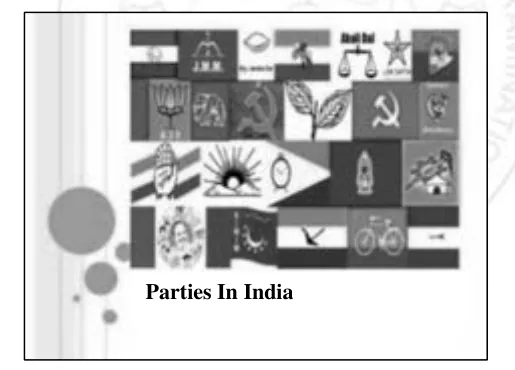
[context: picture showing the symbols of many political parties, captioned 'Parties In India']
Observe the picture given below and answer the question that follows it.
(Source: Quora.com)
How does the party system depicted above benefit a modern democracy?
20. Importance of / reasons for acceptance of Universal Adult Franchise
2×Sample 2023Sample 20244 marks
Give any four arguments that reflect the reasons for which the Universal Adult Franchise is appreciated universally.
The Legislature
21. Ways in which the US Senate limits / checks presidential power
4×Board 2024Board 2026Sample 2025Sample 20274 marks
[context: extract from senate.gov on the Senate's power of 'advice and consent' on presidential appointments]
'Eventually, they settled on the concept of a shared power - the President would make appointments with the 'advice and consent' of the Senate.' (Source: senate.gov, Constitution Day 2024: Senate's power of advice and consent on nominations)
(i) What is meant by the term 'shared power' in the context of appointments? [2]
(ii) How does the Senate's exercise of power of 'advice and consent' act as a check on the President's authority? [2]
22. Ways in which the legislature controls the executive (Question Hour, motions)
4×Board 2023Board 2025Board 2026Sample 20274 marks
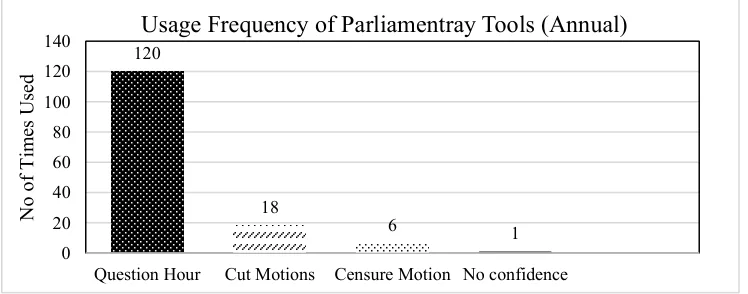
[context: bar graph of hypothetical annual usage of parliamentary tools - Question Hour 120, Cut Motions 18, Censure Motion 6, No-confidence 1]
Study the bar graph below that represents hypothetical data on the annual use of various parliamentary devices in a democratic legislature. Answer the following questions based on it.
(i) Which basic principle of parliamentary democracy is reflected in the above graph? Briefly discuss its relevance. [2]
(ii) Examine the purpose of the most frequently used parliamentary device. Why are the other parliamentary instruments used sparingly? [2]
23. 1-mark: passage of money / financial bills (India and USA)
4×Board 2023Board 2024Board 2026Sample 20271 marks
Arrange the following stages in the correct order of passing a financial bill in the United States until it becomes a law.
(P) Ratification of the financial bill by the US President
(Q) Introduction of the financial bill in the House of Representatives
(R) Passage of bill by the House of Representatives
(S) Bill goes to the Senate for amendment
Select the correct option from the following:
(a) (S), (R), (P) and (Q)
(b) (Q), (R), (S) and (P)
(c) (P), (Q), (R) and (S)
(d) (Q), (S), (R) and (P)
24. 1-mark: election, permanence and dissolution of Lok Sabha / Rajya Sabha
4×Board 2023Sample 2023Sample 20271 marks
'The Council of States shall not be subjected to dissolution, but as nearly as possible one-third of the members shall retire every second year.' (Source: The Constitution of India)
Which doctrinal feature of the Council of States is highlighted in the above statement?
25. Compare the two Houses of Parliament / superior position of the Lok Sabha (8 marks)
3×Board 2024Board 2026Sample 20238 marks
Discuss the superior position of the Lok Sabha by explaining any four of its powers.
26. 1-mark: powers of the US Senate (impeachment court, filibuster)
2×Sample 2024Sample 20251 marks
Answer the following question in one word / phrase.
A device of obstruction occasionally carried to the point of veto in the U.S Senate.
27. 1-mark: composition of the US Congress (equal representation in Senate)
3×Board 2023Board 2024Board 20261 marks
State whether the following is True or False:
The Constitution of the United States gives equal representation to all fifty states in the Senate.
28. Powers of the Lok Sabha / why the two Houses do not share equal powers (4 marks)
2×Board 2023Sample 20254 marks
The two houses of the Union Parliament do not share equal powers. Justify the statement with the help of four reasons.
29. Special powers of the Rajya Sabha
2×Board 2024Sample 20234 marks
Discuss two special powers of the Rajya Sabha.
The Executive
30. 1-mark: emergency provisions (Articles 352, 356, President's Rule)
5×Board 2023Board 2024Board 2025Board 2026Sample 20271 marks
Which Article in the Constitution of India can be suspended during National Emergency?
31. 1-mark: US presidential veto, pocket veto and override
4×Board 2024Board 2025Board 20261 marks
Given below are two statements marked Assertion and Reason. Read the two statements carefully and choose the correct option.
Assertion: If the President of the United States vetoes legislation, it is extremely difficult for Congress to override the veto without the support of both the parties.
Reason: A veto can only be overridden by a two-thirds majority of both the houses.
(a) Both Assertion and Reason are true and Reason is the correct explanation for Assertion.
(b) Both Assertion and Reason are true but Reason is not the correct explanation for Assertion.
(c) Assertion is true and Reason is false.
(d) Both Assertion and Reason are false.
32. 1-mark: executive powers of the US President (war, pardon)
3×Board 2025Board 2026Sample 20251 marks
Observe the relation between the first two words / phrases and complete the analogy.
Declaration of War in India: President :: Declaration of War in the United States: __________.
33. 1-mark: the Permanent Executive (civil service)
3×Board 2023Board 2025Sample 20241 marks
The __________ refers to that part of the Executive which consists of civil servants who serve until retirement.
34. Legislative powers of the US President (veto, messages to Congress)
3×Board 2023Board 2026Sample 20234 marks
[context: extract from Article II, Section 3 of the US Constitution on the President's State of the Union message to Congress]
Read the excerpt given below from the USA constitution and answer the questions that follow.
Article II: Section 3: He shall from time to time give to the Congress Information of the State of the Union, and recommend to their Consideration such Measures as he shall judge necessary and expedient; he may, on extraordinary Occasions, convene both Houses.
(i) Giving information to Congress and recommending measures for their consideration is a Legislative power of the President of the United States. Discuss why this is an important power in a Presidential system. [3]
(ii) State one other Legislative power of the President. [1]
35. Legislative and executive powers of the President of India
3×Board 2023Board 2025Sample 20234 marks
Briefly explain one Executive and one Legislative power of the President of India.
36. Compare the President of the USA with the Prime Minister of India
2×Board 2026Sample 20244/8 marks
Compare the mode of election or appointment of the Prime Minister of India and the President of the United States.
37. Position and role of the Prime Minister of India
2×Board 2024Sample 20254 marks
Explain the position of the Indian Prime Minister in relation to the powers shared with the Parliament and the Council of Ministers.
38. 1-mark: constitutional position of the President of India
2×Board 2025Sample 20231 marks
State whether the following is True or False:
Though she is not a member of either House, the President of India is an integral part of the Union Parliament.
39. Differences between the Political and Permanent Executive
2×Board 2024Board 20264 marks
Discuss two differences between the political executive and the permanent executive.
The Judiciary
40. How is the independence of the judiciary ensured?
3×Sample 2024Sample 2025Sample 20274 marks
State four constitutional provisions or conditions that ensure the independence of judiciary in India.
41. 1-mark: meaning of judicial review
4×Board 2023Board 2026Sample 20241 marks
Answer the following question in one word / phrase.
The constitutional doctrine, which holds that the actions of the executive and legislative branches of government are subject to scrutiny and possible invalidation by the judiciary.
42. 1-mark: jurisdictions of the Supreme Courts (original, appellate, advisory, writ)
2×Board 2023Sample 20271 marks
Choose the correct option that matches the types of jurisdictions given in Column I to their description in Column II.
Column I: A. Original jurisdiction; B. Writ jurisdiction; C. Appellate jurisdiction; D. Advisory jurisdiction
Column II: 1. Issuance of Quo warranto for wrongful use of office; 2. Individuals approach Supreme Court directly to protect their fundamental rights; 3. President seeks opinion on a question of law of fact of public importance; 4. Individuals approach Supreme Court against any judgment of a court or tribunal through special leave.
(a) A-3, B-2, C-1, D-4
(b) A-2, B-1, C-4, D-3
(c) A-4, B-1, C-3, D-2
(d) A-2, B-4, C-2, D-3
43. Passage-based: judicial review - meaning, principles and basis in India and USA
2×Board 2025Sample 20258 marks
[context: passage on Chief Justice Marshall's verdict in Marbury versus Madison asserting the Supreme Court's power as interpreter of the Constitution]
Read the passage given below and answer the questions that follow.
Chief Justice Marshall's masterful verdict in Marbury versus Madison case has been widely hailed. In the face of attacks on the judiciary,...Marshall needed to make a strong statement to maintain the status of the Supreme Court as the head of a coequal branch of government. By asserting the crucial power for Supreme Court (not mentioned in the Constitution) Marshall claimed for the court a paramount position as interpreter of the Constitution.
(Source: https://www.britannica.com/event/Marbury-v-Madison)
(i) What power was asserted by the Chief Justice John Marshall in the landmark case of Marbury versus Madison? Briefly explain its meaning. [2]
(ii) In the context of the power referred to above, briefly explain the following terms: (a) Ultra Vires [2] (b) Severability [2]
(iii) How is the independence of the judiciary ensured in the Constitution of the United States? [2]
44. Compare the Supreme Courts of India and the USA (position and jurisdiction)
2×Board 2026Sample 20244 marks
Compare the relative positions of the Supreme Courts of India and the United States within their respective constitutional systems.
45. 1-mark: conditions of independence of the judiciary
2×Board 2024Sample 20251 marks
State whether the following is True or False.
The rules governing the administration of judicial services are framed by the central government of the nation.
46. 1-mark: judicial activism
2×Board 2024Sample 20231 marks
Give one word / term for the following:
An approach to jurisprudence which believes that the courts can and should go beyond the letter of the law and narrow interpretation to consider broader social implications of their decisions.
47. Appellate jurisdiction of the Supreme Court of India
2×Board 2023Board 20254 marks
Discuss the Appellate Jurisdiction of the Supreme Court of India in criminal and civil matters.
Indian Constitution: Preamble and Salient Features
48. 1-mark: identify a key word of the Preamble (Sovereign, Republic, Secular, Fraternity)
8×Board 2023Board 2024Board 2026Sample 2023Sample 2024Sample 20251 marks
Answer the following question in one word / phrase.
A State that is free to run its own internal affairs and is independent of external control.
49. Key ideals / words of the Preamble (Justice, Socialist, Secular)
3×Sample 2023Sample 20244 marks
Elaborate on the two words that were added to the Preamble to the Constitution of India by the 42nd Amendment Act of 1976.
50. Importance of the Preamble to the Constitution of India
2×Board 2025Sample 20254 marks
Discuss any two reasons for the importance of the Preamble to the Constitution of India.
51. 1-mark: quasi-federal nature of India (single citizenship)
2×Sample 2023Sample 20241 marks
Which of the following is a key aspect of federalism that does not exist in the Indian Constitution?
(a) Independent judiciary
(b) Written constitution
(c) Dual citizenship
(d) Bicameralism
52. Explain given salient features of the Indian Constitution
2×Board 2025Sample 20244 marks
Briefly explain the following salient features of the Constitution of India:
(a) Detailed constitution drawn from many sources
(b) Federal in Structure and Unitary in spirit
53. Salient features of the Indian Constitution (any four)
2×Board 2024Board 20268 marks
India has one of the most comprehensive constitutions in the world. Discuss any four salient features of the Constitution of India.
54. Federal and unitary features of the Indian Constitution
2×Board 2023Sample 20248 marks
Indian Constitution is characterised as having both federal and unitary features. Elaborate on any two features of each type.
Fundamental Rights and Directive Principles
55. Case study: identify the violated Fundamental Right and the remedy (Article 32, writs)
5×Board 2023Board 2024Sample 2023Sample 2024Sample 20278 marks
[context: a state restricts entry of women of a particular age group to sacred spaces; the Supreme Court by majority strikes down the practice as violating equal citizenship and dignity (Times of India, 29 September 2018)]
Read the excerpt given below and answer the questions that follow.
A certain state in India restricted the entry of women to sacred spaces which was challenged by a group of petitioners. After extensive hearings, the Supreme Court, by a majority decision, held that the practice of denying entry to women of a particular age group could not be sustained in a democratic republic governed by the Constitution. The Court observed that social practices and traditions must conform to constitutional principles, and that exclusion based on biological characteristics undermines the idea of equal citizenship. It further stated that dignity, individual autonomy, and equal participation in public spaces are essential features of democratic governance.
(i) Which Fundamental Right and the corresponding Article can be inferred as being challenged in this case? [2]
(ii) A group of citizens approached the Supreme Court to challenge the exclusion.
(a) Which writ would be most suitable in this case and why? [2]
(b) Under which Fundamental Right can a citizen directly move to the Supreme Court for the enforcement of Fundamental Rights? [1]
(iii) How do mass protests and resistance to judicial decisions impact democratic institutions? [3]
56. 1-mark: nature, objective and classification of Directive Principles
3×Sample 2024Sample 20271 marks
The Directive Principles of State Policy focus on improving living conditions and ensuring justice for all citizens. What does this reflect about their objective?
57. 1-mark: justiciability of Directive Principles (Right to Education)
3×Board 2024Board 2026Sample 20231 marks
State whether the following is True or False:
The Right to Education (Article 21A) is an example of a Directive Principle that was given the justiciable status of a Fundamental Right through an amendment to the Constitution of India.
58. Rights under the Right to Equality (Articles 14-18)
2×Board 2025Sample 20258 marks
Discuss any four rights conferred under the Right to Equality (Articles 14-18) in the Constitution of India.
59. Gandhian Directive Principles of State Policy
2×Board 2023Board 20264/8 marks
Explain any four Gandhian Principles included in the Directive Principles of State Policy in Part IV of the Constitution of India.
Local Self-Government
60. 1-mark: 73rd and 74th Amendments (constitutional status, State Election Commission)
6×Board 2024Board 2026Sample 2023Sample 2024Sample 2025Sample 20271 marks
Which feature is common to both the 73rd and 74th Constitutional Amendment Acts?
61. Features of the 73rd Amendment
2×Board 2023Board 20268 marks
State and explain any four features of the 73rd Amendment to the Constitution of India.
62. Features of the 74th Amendment (urban local bodies)
2×Board 2024Board 20258 marks
Explain any four key features of the 74th Amendment to the Constitution of India.
Democracy in India: Challenges
63. 1-mark: identify the caste system
2×Sample 2025Sample 20271 marks
G.S. Ghurye, a sociologist, studied Indian society and offered six distinctive principles that defined a particular trait unique to Indian society. According to him, this system compartmentalised the population into groups and then arranged it into a vertical hierarchy.
Identify the particular social system indicated above that poses a challenge to Indian democracy.
64. MCQ: identify the kind of regional aspiration from a situation
2×Board 2025Sample 20271 marks
The Cabinet of a state in India attempted to mandate job reservations for locals in private companies. The proposed bill aimed to reserve 50% of management jobs and 70-75% of non-management roles in private industries for local candidates who possess proficiency in local language.
Which political principle is reflected in the above situation?
(a) Sons of the Soil
(b) National integration
(c) Local Self Government
(d) Secularisation of politics
65. Kinds of regional aspirations (sons-of-the-soil, new states, secession)
3×Board 2023Board 2026Sample 20234 marks
Briefly explain any two ways in which regional aspirations affect Indian politics.
66. Role of caste in Indian politics
2×Board 2024Sample 20274 marks
Comment on the role of caste in Indian politics.
67. Kinds of political violence in India
2×Board 2025Sample 20254 marks
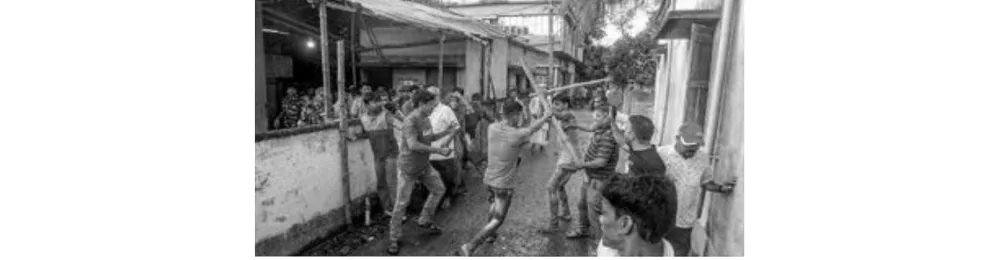
[context: news photograph of workers of two rival political groups clashing during Panchayat elections]
The picture given below shows the workers of two rival political groups clashing during Panchayat Elections.
(Source: https://timesofindia.indiatimes.com)
(i) How does the picture shown above depict a challenge to Indian democracy? [2]
(ii) With the help of a relevant example, outline any other significant form of the challenge that has emerged in India in recent times. [2]
68. 1-mark: meaning of regionalism
2×Sample 2023Sample 20241 marks
__________ means the love for one's area of living or a particular region to which one belongs.