ISC Class 12 History Important Questions 2027 (Repeated in Board Exams)
Last updated:
49 question patterns that appeared in two or more of the analysed papers (4 board + 2 official sample papers (2023–2026)). The numbers change; the question does not.
Towards Independence and Partition (1939-1947)
1. Reactions of the Congress and the Muslim League to the Cabinet Mission Plan
3×Board 2023Board 2025Sample 20234/8 marks
Briefly discuss any two reactions of each of the following to the proposals of the Cabinet Mission Plan.
(1) Congress
(2) Muslim League
2. MCQ: Identify the Quit India Movement from a clue ('Do or Die' / anniversary)
2×Board 2026Sample 20251 marks
In 2017, the 75th Anniversary of a historic Indian Movement was commemorated. Identify the movement.
(a) The JP Movement
(b) The Quit India Movement
(c) The Civil Disobedience Movement
(d) The Movement for Women's Rights
3. Reasons for the acceptance of the Mountbatten Plan
2×Board 2025Sample 20254 marks
State any four significant reasons for the acceptance of the terms of the Mountbatten Plan by the Congress.
4. State the proposals of the Cripps Mission
2×Board 2024Sample 20254 marks
The Cripps Proposals for the first time proposed the formation of a Constituent Assembly. In the light of the above statement, enumerate any four proposals of the Cripps Mission.
5. Reasons for the rejection / failure of the Cripps Mission
2×Board 2024Sample 20254 marks
Elucidate any four reasons that led to the failure of the Cripps' Mission and eventually, to the Quit India Resolution.
6. Name the Quit India Resolution (8 Aug 1942) and explain why Gandhi demanded immediate freedom
2×Board 2024Board 20264 marks
Name the resolution that the All India Congress Committee passed on the 8th August, 1942. Why did Gandhi demand complete freedom immediately?
7. Steps taken by Subhas Chandra Bose to revive and reorganise the INA
2×Board 2023Board 20264 marks
Discuss any four steps taken by Subhash Chandra Bose to revive and reorganise the Indian National Army after taking over as its Supreme Commander.
8. 1-mark: Key provision / change made by the Mountbatten Plan
2×Board 2024Board 20251 marks
The provinces of Punjab and Bengal were to be divided between India and Pakistan. Which one of the following Plans proposed this division?
(a) The Mountbatten Plan
(b) The Cabinet Mission Plan
(c) The Cripps Mission Plan
(d) The August Offer
9. State the proposals / features of the Cabinet Mission Plan (1946)
2×Board 2023Board 20254 marks
State any four major proposals of the Cabinet Mission Plan.
Establishment of Indian Democracy (1947-1966)
10. Potti Sriramulu and the demand for a separate Andhra state
2×Board 2026Sample 20231/4 marks
Name the activist who died after a fifty-six day hunger strike demanding the creation of a Telugu-speaking state.
11. Fill in: the first general election (1952) was based on the principle of ___ (universal adult franchise)
2×Board 2023Sample 20251 marks
The first Lok Sabha election in India was held on the principle of ________.
Development of Indian Democracy (1964-1977)
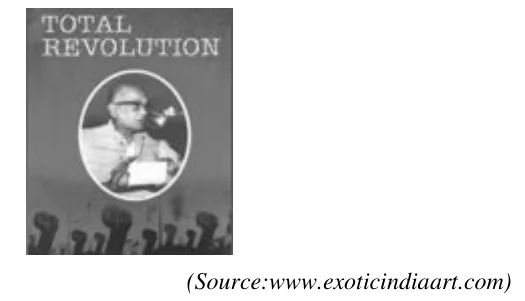
12. 1-mark: Identify Jayaprakash Narayan as leader of the Total Revolution
2×Sample 2023Sample 20251 marks
[context: cover page of the book 'Total Revolution'] The image given below shows the cover page of the book Total Revolution. Name the author who spearheaded the Movement referred to on the cover page of the book.
13. 1-mark: Identify Lal Bahadur Shastri (PM in 1964, 'Jai Jawan, Jai Kisan')
2×Board 2023Sample 20251 marks
Who among the following Prime Ministers prioritised self-reliance and is still remembered for the slogan "Jai Jawan, Jai Kisan"?
(a) Jawaharlal Nehru
(b) Indira Gandhi
(c) Morarji Desai
(d) Lal Bahadur Shastri
14. MCQ: Identify an opposition party (ideology / 1967 election)
2×Board 2025Board 20261 marks
One important feature of the General Elections of 1967 was the rise of opposition parties. Which one of the following parties emerged as the main opposition party in India?
(a) Socialist Party
(b) Swatantra Party
(c) Bharatiya Jan Sangh
(d) Communist Party of India (Marxist)
15. 1-mark: Charu Majumdar's Historic Eight Documents and the Naxal Movement
2×Board 2024Board 20261 marks
Who was the author of The Historic Eight Documents?
16. Rise of the Naxal Movement: causes and role of students
2×Board 2023Board 20254 marks
The Naxal Movement in India began in the 1960s as a left-wing extremist movement, primarily driven by socio-economic issues. In this context, explain any four causes for the rise of the Naxal Movement.
Changing Face of Indian Democracy (1977-1986)
17. Causes of the Assam agitation (1979-85)
3×Board 2023Sample 2023Sample 20254 marks
In 1979, AASU and the All Assam Gana Sangram Parishad (AAGSP) began a series of protests across Assam. The educational institutions in the state remained shut for a long time. Periodic strikes at times turned violent. This was the start of a six-year agitation led by students. (Source: Economic Times Archive) Based on the above report, state any four reasons for the agitation.
18. Reasons for the downfall of the Janata government
3×Board 2023Board 2024Sample 20251/4 marks
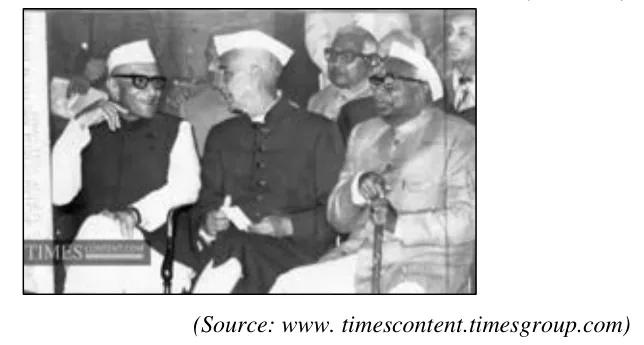
[context: photograph of the trio of Janata government leaders awaiting the swearing-in at Rashtrapati Bhawan, 1977] Which one of the following BEST describes the reason for the Janata government's short-lived tenure?
(a) Struggle for power and control among the leaders of the Janata government
(b) Disagreements within the Janata government on foreign policy.
(c) Ideological differences within the Janata government over economic policies.
(d) Conflicting views on social welfare programmes.
19. Policies / measures of the Janata government (1977-79)
2×Board 2024Board 20264 marks
For the first time since independence, the Congress party was defeated in the elections of 1977 and a new party came into power at the Centre. In this context, discuss any four measures adopted by the newly established non-Congress government to restore the civil liberties of the people of India.
India's Foreign Policy
20. 1-mark: Dalai Lama's asylum in India (1959) - reason / impact
2×Board 2023Sample 20251 marks
On 4th April 1959, Prime Minister Jawaharlal Nehru announced in Parliament that the Dalai Lama had crossed into Indian territory and had been granted political asylum in India. State any one impact this event had on the Indo-Sino ties in 1959.
21. Causes of the first Indo-Pak War (1947-48) over Kashmir
2×Board 2024Board 20264 marks
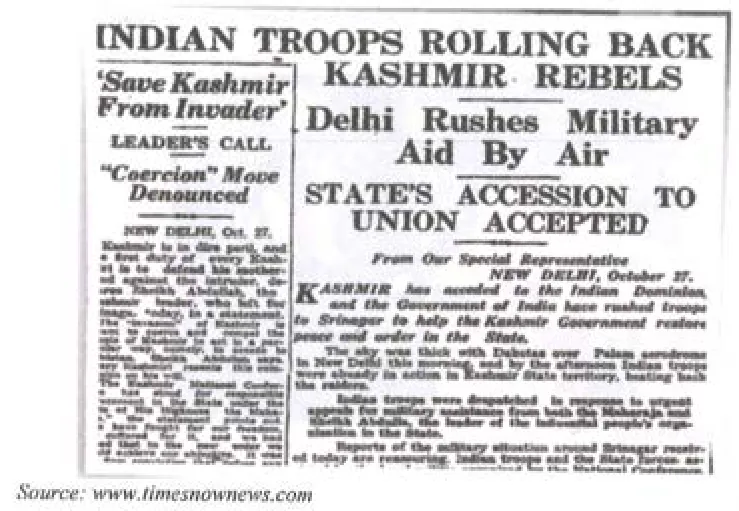
[context: news extract 'Indian Troops Rolling Back Kashmir Rebels ... State's Accession to Union Accepted', October 1947] Which war is being referred to in the image of the news extract given below? Briefly explain any three causes of this war.
22. 1-mark: Border dispute / territory (Aksai Chin) in the Sino-Indian War 1962
2×Board 2023Board 20251 marks
Mention the most important territorial gain made by China in the Sino-Indian war of 1962.
23. Consequences of the Indo-Pak War of 1971
2×Board 2023Board 20254 marks
Discuss any four consequences of the Indo-Pak War of 1971.
Movements for Women's Rights
24. 1-mark: Women's organisations of the anti-dowry movement and the evils they fought
4×Board 2023Board 2024Board 2025Sample 20231 marks
The Stree Sangharsh Organisation launched a campaign against the prevailing social evils of:
(P) Dowry
(Q) Gender Discrimination
(R) Child marriage
(S) Domestic violence
(a) Only (R) and (S)
(b) Only (Q) and (R)
(c) Only (P) and (Q)
(d) Only (P) and (S)
25. Features / findings of the Towards Equality Report (1974)
2×Sample 2023Sample 20254/8 marks
Discuss any eight features of the Towards Equality Report of 1974.
World War II
26. 1-mark: Turning-point battles of WWII (El Alamein, Stalingrad, Midway)
3×Board 2023Board 2026Sample 20231 marks
Which one of the following battles during the Second World War proved to be a turning point in the fight for control of the Pacific?
(a) Stalingrad
(b) El Alamein
(c) Midway Island
(d) Battle of Britain
27. MCQ: Objective / supreme example of appeasement (Munich)
2×Board 2026Sample 20251 marks
Appeasement as a diplomatic policy was followed by Britain and France with the objective of:
(a) avoiding war with aggressive nations at any cost.
(b) encouraging economic cooperation for mutual benefit.
(c) checking the spread of communism in western Europe.
(d) establishing friendly relations with the neighbouring countries.
28. Anglo-French appeasement: meaning, reasons and examples
2×Board 2024Sample 20234 marks
One of the primary reasons for the outbreak of the Second World War was the policy of Appeasement followed by Britain and France. Give any four reasons to explain why these two nations adopted the policy of Appeasement.
29. 1-mark: How Pearl Harbour brought the USA into the war
2×Board 2024Board 20251 marks
The Japanese attack on Pearl Harbour brought the ________ into the War and made it worldwide in scope.
30. Steps by which Hitler made Germany a great power again
2×Board 2023Board 20254 marks
The union of Austria with Germany (March 1938) was among one of Hitler's greatest achievements before the outbreak of the Second World War. Discuss any four developments, other than the one referred to above, to show how Hitler achieved his objective of making Germany a great power again.
De-colonisation: China, Ghana and Kenya
31. Features and impact of the Great Leap Forward and the Communes
3×Board 2024Board 2026Sample 20254/8 marks
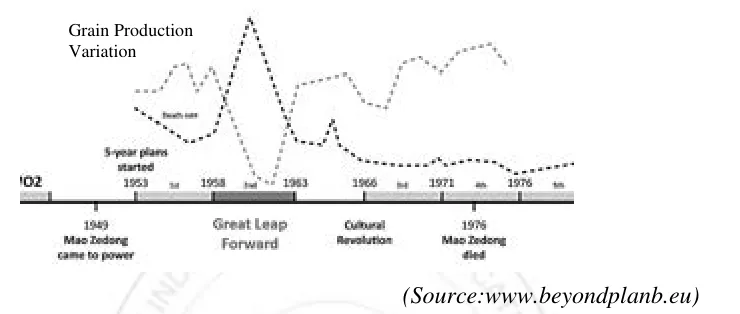
[context: graph of grain production and death rate in China during the Great Leap Forward] The graph given below indicates the production of grain during the Great Leap Forward in China. With reference to the above graph, explain the main features of the Commune system during the Great Leap Forward. Why was there such a sharp spike in the death rate as indicated in the graph above?
32. Reasons for Nkrumah's overthrow in Ghana (1966)
2×Board 2023Board 20264 marks
'Kwame Nkrumah was both a visionary and a victim of his own ideals.' In this context, evaluate any four reasons for Nkrumah's overthrow by a military coup in 1966.
33. Role of Jomo Kenyatta in Kenya's struggle for independence
2×Board 2023Board 20254/8 marks
Examine the role of Jomo Kenyatta with reference to any four steps taken by him during Kenya's struggle for independence.
Cold War (1945-1991)
34. 1-mark: Impact of the collapse of communism on Germany - reunification (Oct 1990)
3×Board 2023Board 2024Board 20251 marks
State the immediate impact of the collapse of Communism in East Europe (October 1990) on the future of Germany.
35. 1-mark: Communist takeover of Czechoslovakia completed the Iron Curtain
2×Board 2026Sample 20231 marks
Which country's takeover by the Communists destroyed the 'bridge' between the East and West Europe and completed the 'iron curtain'?
36. Events leading to the downfall of communism in East Germany
2×Board 2026Sample 20234 marks
In the brief period between August 1988 and December 1991, communism in Eastern Europe was dramatically swept away. In this context, discuss any four events leading to the downfall of communism in East Germany.
37. Features of the Marshall Plan
2×Board 2024Sample 20234 marks
[context: cartoon showing 'Europe' climbing a cliff on a rope labelled 'Marshall Plan'] Given below is a cartoon on the Marshall Plan. With reference to the cartoon, briefly discuss any four significant features of the Marshall Plan.
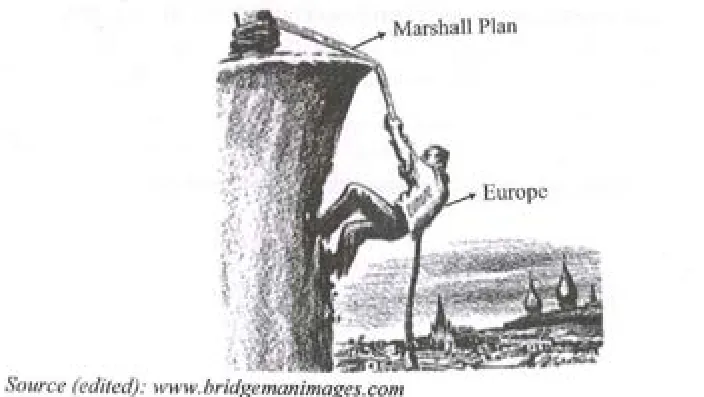
38. Gorbachev's reforms (perestroika) and why they failed
2×Board 2023Sample 20234 marks
Enumerate any four drawbacks of Gorbachev's policy of Perestroika that eventually led to the collapse of the Soviet Union (1985).
Protest Movements: Civil Rights, Anti-Apartheid and Feminism
39. Contributions of Martin Luther King Jr. to the Civil Rights Movement
3×Board 2024Board 2026Sample 20254/8 marks
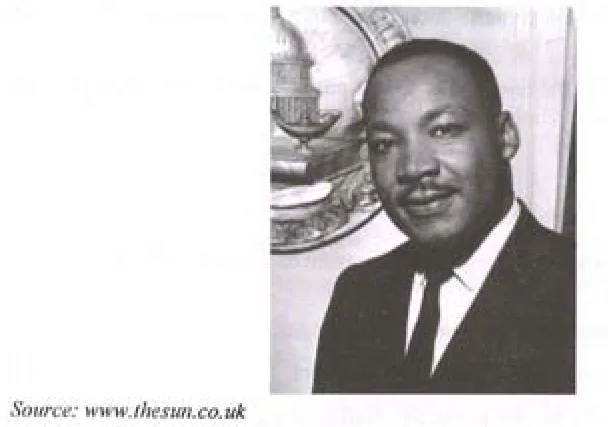
[context: photograph of a Civil Rights leader (Martin Luther King Jr.)] With reference to the Civil Rights Movement in the US, identify the activist leader shown below. Discuss any three contributions of this activist leader.
40. Identify Betty Friedan and explain how The Feminine Mystique sparked Second Wave Feminism
2×Board 2025Sample 20254 marks
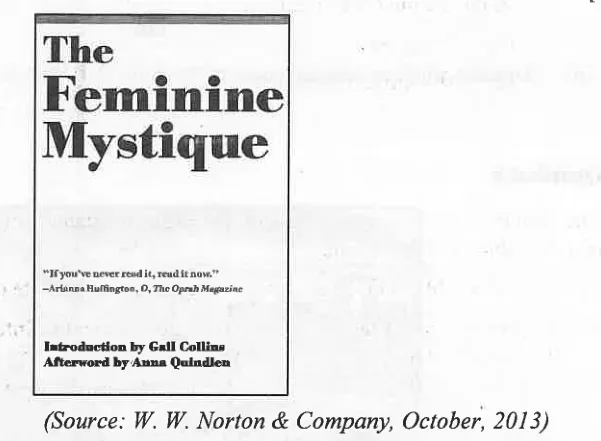
[context: cover of the book The Feminine Mystique] Name the author of the book shown above. Explain any three ways in which it sparked off the Second Wave of American Feminism in the 20th century.
41. 1-mark: Equal Pay Act 1963 / Civil Rights Act 1964 and American women
2×Board 2024Sample 20251 marks
Mention any one provision of the Equal Pay Act of 1963 that impacted the status of women in America.
42. Features of Apartheid in South Africa
2×Board 2023Sample 20254 marks
State any two features of Apartheid and its implementation by the South African government. Mention any two reasons to explain why it led to widespread protests by the black Africans in the country.
43. Steps taken by de Klerk to end Apartheid / transition to majority rule
2×Board 2024Sample 20234 marks
President F.W. Klerk decided to end Apartheid and gradually move South Africa towards black majority rule. In this context, discuss any four steps taken by Klerk to achieve his objectives peacefully.
44. 1-mark: Author of The Feminine Mystique (Betty Friedan)
2×Board 2023Sample 20231 marks
The author of the book Feminine Mystique was:
(a) Gloria Steinem
(b) Maya Angelo
(c) Betty Friedan
(d) Angela Davis
45. Impact of the Second Wave Feminist Movement in the USA
2×Board 2023Sample 20234 marks
Evaluate the impact of the Feminist Movement on the status of women in the USA.
Middle East: Israeli-Palestine Conflict (1916-1993)
46. Causes (and consequences) of the Suez Crisis 1956 - Nasser's measures
2×Board 2024Board 20264/8 marks
The Egyptian President Colonel Nasser was aggressively in favour of Arab unity and independence. In this context, discuss any four hostile measures adopted by him to counter the increasing Anglo-French control of the Suez Canal.
47. Terms of the Camp David Accord (1979)
2×Board 2023Board 20264 marks
To resolve the Israel-Palestine conflicts, some serious attempts were made towards peace settlements of contentious issues. In this context, discuss four significant terms of the Camp David Accord (1979).
48. 1-mark: Demand of the World Zionist Movement
2×Board 2024Board 20251 marks
The world Zionist Movement raised the demand for restoration of ________ to the Jewish people.
49. 1-mark: Meaning of Intifada
2×Board 2023Board 20241 marks
What is meant by the term Intifada in the context of the Israeli-Palestine conflict?