ISC Class 12 Biology Important Questions 2027 (Repeated in Board Exams)
Last updated:
65 question patterns that appeared in two or more of the analysed papers (4 board + 5 official sample papers (2023–2027)). The numbers change; the question does not.
Sexual Reproduction in Flowering Plants
1. work out endosperm chromosome number / ploidy (3n) numerical
4×Board 2025Board 2026Sample 2025Sample 20261 marks
If the number of chromosomes in the cells of the calyx is 16, how many chromosomes will be formed in the endosperm after double fertilisation?
2. draw labelled L.S. of anatropous ovule
3×Board 2023Sample 2024Sample 20273 marks
Draw a neat, labelled diagram of the L.S. of an anatropous ovule.
3. calculate pollen grains / male gametophytes from microspore mother cells
2×Board 2026Sample 20261 marks
In a particular plant with bilobed dithecous anther, there were 50 Pollen Mother Cells. Only 25% could develop their pollen tubes. Calculate the number of pollen grains that would proceed for fertilisation.
4. discuss methods / contrivances to prevent self-pollination
2×Board 2023Board 20252/5 marks
(a) Discuss any three contrivances for prevention of self-pollination in flowering plants. (b) Oranges can be produced by processes like Apomixis and Polyembryony. State two differences between these processes.
Human Reproduction
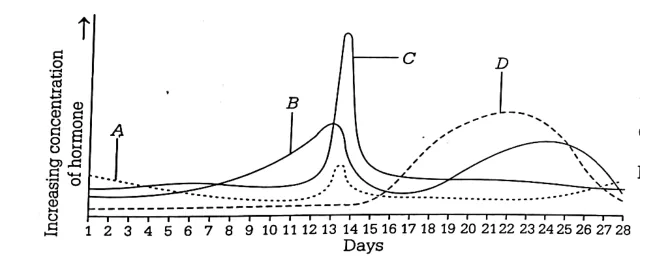
5. interpret menstrual-cycle diagram / hormone graph and answer
3×Board 2023Sample 2024Sample 20263/5 marks
(i) The following graph represents the relative concentrations of the four hormones present in the blood plasma of a woman during her menstrual cycle. Identify the hormones A, B, C and D. (ii) During a fertility consultation, a woman mentions her menstrual cycle lasts for 33 days regularly. To help her conceive, the doctor advised her to track ovulation. On which day of the menstrual cycle is she most likely to ovulate?
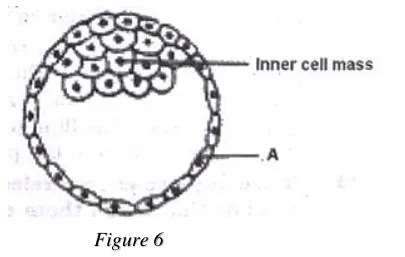
6. Blastocyst stage: trophoblast and inner cell mass
2×Sample 2024Sample 20272 marks
The diagram given below represents a specific stage of human embryonic development. (a) Name the stage of human embryo represented by the given diagram. (b) Identify the part labelled 'A' and mention its function. (c) What happens to the inner cell mass after implantation?
7. Labelled diagram of T.S. of ovary / Graafian follicle
2×Board 2024Sample 20273 marks
Draw a neat, labelled diagram of the Graafian follicle.
8. draw labelled diagram of mammalian testis
2×Board 2025Sample 20243 marks
Draw a neat and well labelled diagram of T.S. of mammalian testis.
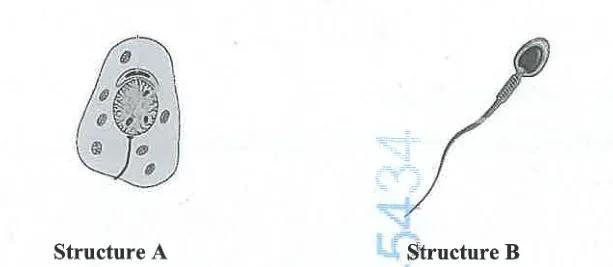
9. identify spermatogenesis stages / spermiogenesis from diagram
2×Board 2024Board 20262/3 marks
The two structures shown below are formed in the process of spermatogenesis. (i) Identify the process which converts Structure A to Structure B. (ii) State any two modifications observable in Structure B.
Reproductive Health
10. explain lactational amenorrhoea as a natural contraceptive
3×Board 2025Sample 2023Sample 20241/2 marks
Give a reason: The period of lactational amenorrhoea is marked by the absence of menstruation.
11. suggest and explain highly effective contraceptive methods with working principle
2×Sample 2024Sample 20262 marks
As a volunteer for an awareness programme in rural areas, you have been asked to design a poster on sexual health, highlighting birth control options available to males. What two contraceptive methods for males will you highlight in the poster that have negligible chances of failure? Mention the working principle for each method.
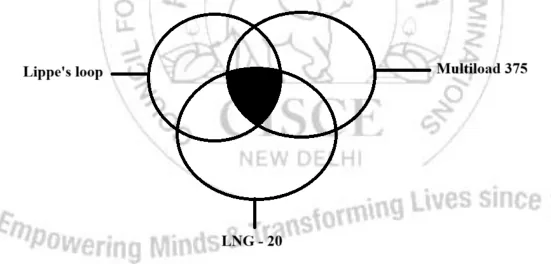
12. Copper-releasing IUDs (Multiload 375, Cu-T) and how they work
2×Board 2024Sample 20272 marks
Study the following Venn diagram (circles: Lippe's loop, Multiload 375, LNG-20; common region shaded) and answer the questions that follow. (i) Which contraceptive method occupies the shaded region in the given Venn diagram? (ii) How does Multiload – 375 function as a contraceptive agent?
Principles of Inheritance and Variation
13. Pedigree analysis: is the trait dominant/recessive and autosomal/sex-linked
2×Sample 2023Sample 20272/5 marks
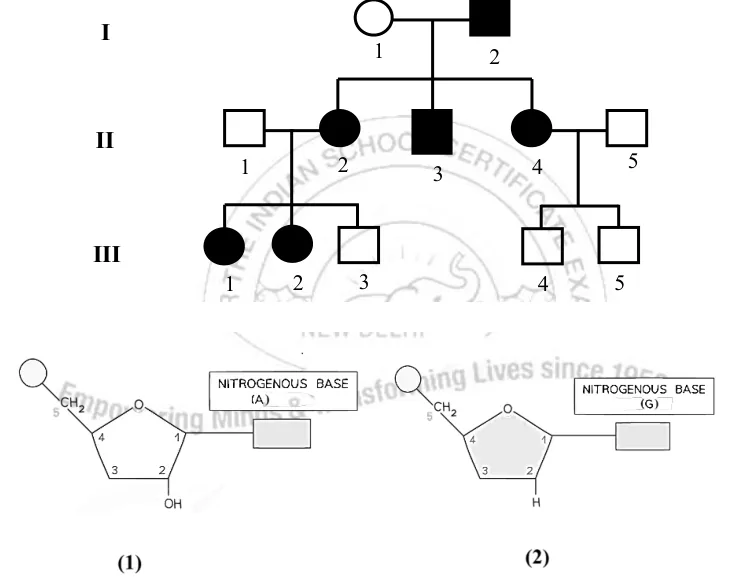
(i) Marfan Syndrome is a human genetic disorder caused by a mutation in the FBN1 gene. This gene codes for fibrillin – 1, a protein that gives connective tissues strength and flexibility. People suffering from Marfan Syndrome show symptoms like dislocation of the eye lens, flat feet, unusually tall height and rupturing of aorta. The following pedigree chart represents the pattern of inheritance of Marfan Syndrome in a family. (a) Identify the type of inheritance from the given pedigree chart. (b) If the parents of a child are heterozygous for this particular trait, calculate the probability of the child being unaffected using a Punnett square. (ii) Prisha is provided with two nucleotides as shown below. Which of these nucleotides should she choose to make an ideal genetic material? Give a reason.
14. features / cause of Klinefelter's syndrome
2×Board 2026Sample 20241/2 marks
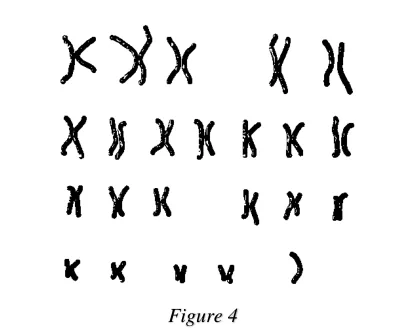
Shown below is the karyotype of an individual. (i) State one characteristic reproductive feature and one physical attribute of such an individual. (ii) What is the category of such disorders called? Which abnormality during cell division causes such disorders?
15. incomplete dominance cross: work out ratio and identify dominance
2×Board 2024Sample 20242/3 marks
A male plant, bearing red flowers, was crossed with a female plant bearing yellow flowers. In the F1 generation, all the flowers were orange in colour. (i) Give a reason to explain the change of colours in F1 generation. (ii) Mention the ratio of red flowers, yellow flowers and orange flowers in the F2 generation.
16. work out probability of haemophilia in offspring
2×Board 2024Board 20251/5 marks
Consider the information given below about a family. Rafiq, a ten year old boy, injured himself badly and bleeding could not be stopped. His uncle had lost his life in a similar condition. Rafiq's family underwent genetic analysis to detect Bleeder's disease; his parents, sister Farah and paternal grandmother were tested. Rafiq's mother and grandmother were found to be carriers of the Bleeder's disease. (i) Draw a single pedigree chart to show the pattern of inheritance in Rafiq's family. (ii) What kind of inheritance pattern prevails in Rafiq's family? (iii) What are the chances of (a) Farah suffering from the same disease? (b) Farah being a carrier of the same disease?
17. work out probability of colour-blind son from carrier lineage
2×Board 2023Sample 20231 marks
The maternal grandfather of a boy is colourblind, but his maternal grandmother is normal. The father of the boy is also normal. What is the probability of this boy being colourblind?
18. determine genotype/phenotype from pedigree of a blood disorder
2×Board 2023Board 20241/2 marks
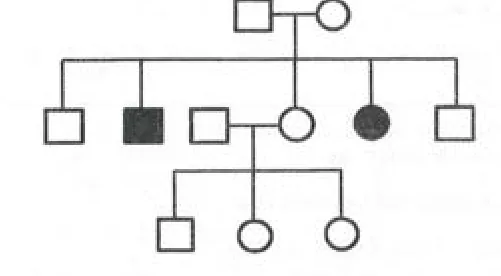
The pedigree chart given below represents the pattern of inheritance of thalassaemia in a family. What could be the genotype of the affected male?
Molecular Basis of Inheritance
19. explain lac operon structure and function with lactose
3×Board 2023Sample 2026Sample 20273/5 marks
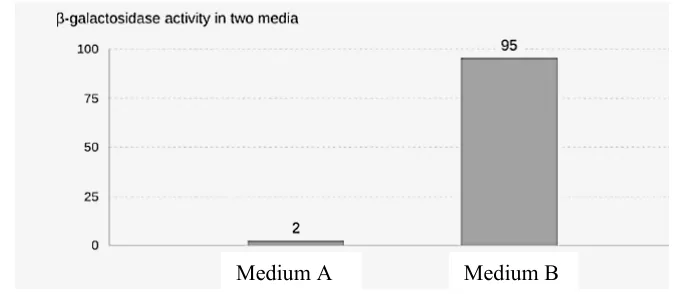
The bar graph given below shows the growth of E. coli in two different media (Medium – A and Medium – B), along with the corresponding β-galactosidase activity (Medium A: 2; Medium B: 95) and the state of the lac operon in each case. Based on the above graph, answer the following questions: (a) Why is the operon switched OFF in one medium? (b) The lac operon is described as an example of negative regulation of gene expression. Explain the statement with reference to the role of the operator site.
20. calculate base percentages using Chargaff's rule
3×Board 2025Sample 2023Sample 20271/3 marks
In a single-stranded segment of a DNA molecule, the base ratio (A+T):(G+C) is found to be 0·3:1. What will be the ratio (A + G):(T + C) for the entire double-stranded DNA molecule?
(a) 1:1
(b) 3:10
(c) 10:3
(d) 13:3
21. degeneracy of the genetic code (codons for one amino acid)
2×Board 2024Sample 20261 marks
Assertion: An amino acid in polypeptide chain is not always altered even due to change in the third nitrogenous base of codon.
Reason: The amino acid does not change due to degeneracy of genetic code.
(a) Both Assertion and Reason are true and Reason is the correct explanation for Assertion.
(b) Both Assertion and Reason are true but Reason is not the correct explanation for Assertion.
(c) Assertion is true and Reason is false.
(d) Both Assertion and Reason are false.
22. describe Griffith's experiment and state its conclusion
2×Board 2024Sample 20265 marks
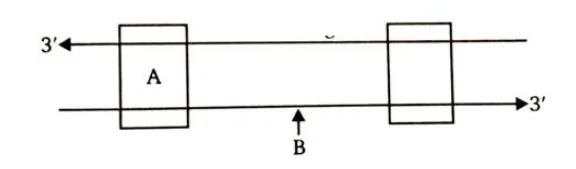
(a) Write a brief note on Griffith's experiment. What was the conclusion drawn from this experiment? (b) Name the parts 'A' and 'B' of the transcription unit shown below.
Evolution
23. Hardy-Weinberg numerical: calculate allele / genotype frequencies
6×Board 2024Board 2025Sample 2024Sample 2025Sample 2026Sample 20272/3 marks
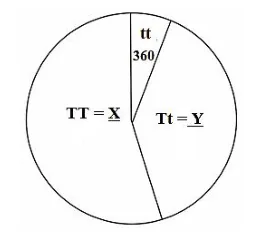
The given pie chart shows the distribution of genotypes in a population of 9000 pea plants (TT = X, Tt = Y, tt = 360). The population is in Hardy-Weinberg equilibrium. It is known that 360 plants are homozygous recessive (tt). Using this information, calculate the following: (a) Frequency of the dominant allele (T) (b) Number of heterozygous pea plants
24. identify/justify analogous organs as convergent evolution
2×Board 2025Sample 20261 marks
Why are tendrils of vine (Vitis) and pea (Pisum) considered to be analogous organs?
Human Health and Diseases
25. outline / interpret the life cycle of the malarial parasite
3×Board 2023Board 2026Sample 20272/3 marks
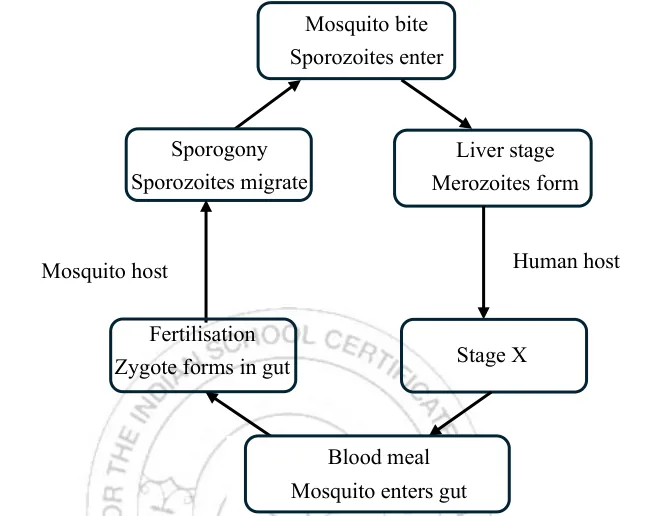
The flowchart provided below represents the life cycle of Plasmodium, alternating between its human host and the female Anopheles mosquito. (a) Identify Stage 'X'. (b) Name the toxin directly responsible for the recurring chills and fever experienced by a patient suffering from malaria.
26. Types of tumours: benign vs malignant (metastasis)
2×Board 2025Sample 20271/2 marks
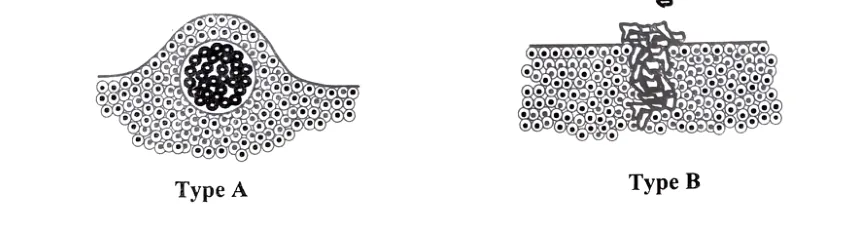
The figure given below shows two different types of tumours, Type A and Type B. State one characteristic feature of each type.
27. name the causative fungus of ringworm/skin lesions
2×Board 2026Sample 20261 marks
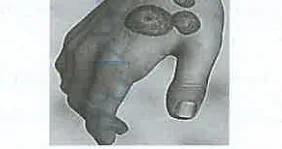
Shama complained of severe itching in certain parts of her body where patches as shown below appeared on her skin. Write the biological name of the causative agent responsible for her condition.
28. identify cannabinoids and their source plant Cannabis sativa
2×Board 2025Board 20261/3 marks
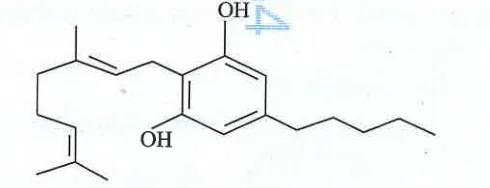
Study the chemical structure of an addictive drug shown below and answer: (i) Mention the scientific name of the source plant of the above drug. (ii) State any one effect of this drug on human body. (iii) What is meant by withdrawal symptom?
29. identify interferons as antiviral chemicals
2×Board 2024Sample 20241/2 marks
If a person shows the production of interferons in his body, then he is suffering from:
(a) Malaria
(b) Ring worm
(c) Dengue
(d) Typhoid
30. identify IgE as the antibody responsible for allergy
2×Board 2024Sample 20231/2 marks
In human plasma, five different types of immunoglobulins are found. Which type of immunoglobulin is responsible for allergic reactions?
31. why anti-tetanus antitoxin/injection is given (preformed antibodies)
2×Board 2023Sample 20231 marks
Assertion: A person who has received a cut from a sharp object and is bleeding, needs to be given an anti-tetanus injection.
Reason: Anti-tetanus injection stimulates the production of antibodies for tetanus.
(a) Both Assertion and Reason are true, and Reason is the correct explanation of Assertion.
(b) Both Assertion and Reason are true, but Reason is not the correct explanation of Assertion.
(c) Assertion is true, but Reason is false.
(d) Both Assertion and Reason are false.
32. expand the abbreviation NACO
2×Board 2023Board 20241 marks
Expand the abbreviation NACO.
Microbes in Human Welfare
33. Biogas: main component (methane) and the methanogens that produce it
2×Sample 2024Sample 20272/3 marks
Cattle excreta is an important source for producing domestic fuel. (a) Name the largest component of this domestic fuel. (b) Write the biological name of the microbe responsible for production of this domestic fuel.
34. suggest a biofertiliser/biological method to raise soil fertility
2×Sample 2025Sample 20261 marks
Ravi wanted to grow rice in his field. He was very concerned about environment degradation, so he did not want to use chemical fertilisers. Suggest a suitable biological method to Ravi.
35. distilled vs undistilled alcoholic beverages / yeast used
2×Sample 2023Sample 20262/3 marks
Microbes especially yeasts have been used for the production of beverages like wine, beer, whisky, brandy, or rum. Depending on the type of raw materials used for fermentation and type of processing (with or without distillation) different types of alcoholic drinks are obtained. (i) Mention the scientific name of the organism used to prepare fermented beverages. (ii) Name any one beverage obtained without distillation of fermented broth.
36. explain biocontrol and the role of specific biocontrol agents
2×Sample 2023Sample 20253/5 marks
(a) Why are the biocontrol agents preferred over the chemical pesticides? (b) Explain the role of any two biocontrol agents by mentioning their target pests.
37. explain the steps of primary and secondary sewage treatment
2×Board 2023Board 20253 marks
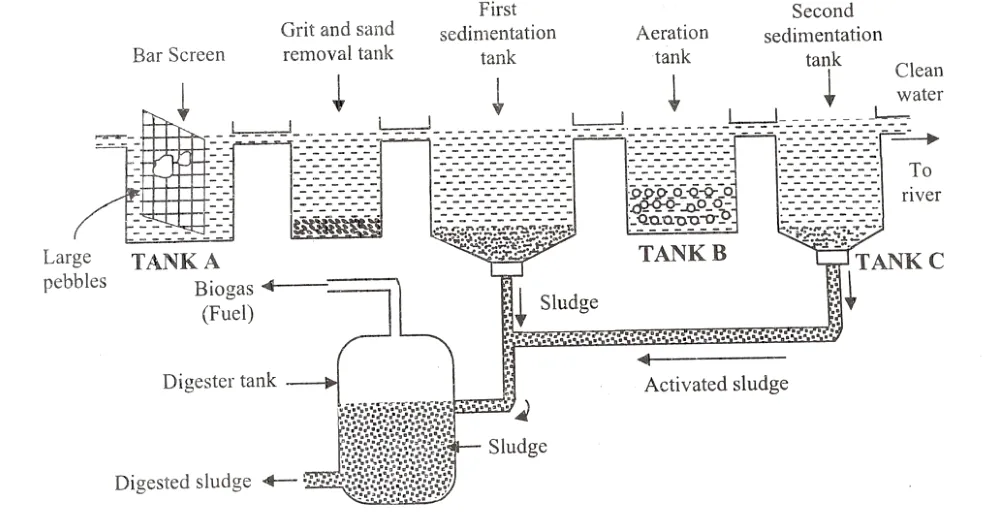
Microbes have been used by humans in household, industrial and agricultural setups. One such use is shown in the diagram given below. (i) Tank A represents primary treatment of sewage while Tank B shows its secondary treatment. State one difference between the two kinds of sewage treatment. (ii) Identify the tank in which flocs are added. (iii) What is the purpose of using microbes in sewage treatment?
Biotechnology: Principles and Processes
38. derive the name of a restriction enzyme by standard nomenclature
4×Board 2025Board 2026Sample 2026Sample 20271 marks
A research scholar isolated a novel restriction enzyme from Bacillus anthracis strain ZT4. It was the third restriction enzyme to be extracted from this specific strain. Derive the scientific name for this enzyme by applying the standard rules of biological nomenclature.
39. identify / write a palindromic recognition sequence
3×Sample 2023Sample 2025Sample 20271 marks
A retroviral RNA undergoes reverse transcription to produce a double-stranded DNA molecule containing a six-nucleotide-long palindromic sequence. A partial segment of this double-stranded DNA is shown below:
5′– GGA --- – 3′
3′– --- --- --- – 5′
Obtain the six nucleotide long palindromic DNA sequence on the 3′ – 5′ strand of DNA.
40. Insertional inactivation of a selectable marker in pBR322
2×Sample 2025Sample 20271/2 marks
An alien gene was ligated by a research scholar at Sal I site of pBR322 plasmid. It affected a selectable marker. (i) Name the selectable marker which was affected. (ii) State the underlying principle due to which the selectable marker was affected.
41. calculate PCR cycles / molecules produced (2n)
2×Sample 2025Sample 20261 marks
Renu was conducting an experiment. She started with a single DNA strand and ran six cycles of PCR to produce number of molecules of DNA.
42. chemical / method to visualise DNA fragments in gel
2×Board 2024Sample 20261/2 marks
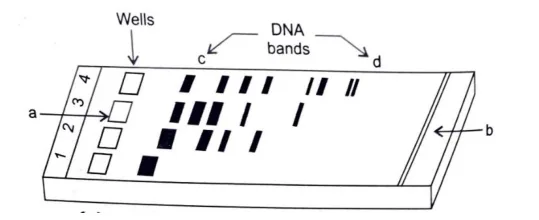
Study the diagram and answer: (i) Identify the anode end in the diagram. (ii) How are these DNA fragments visualised?
43. choose/name bioreactor giving greater surface area for oxygen
2×Board 2026Sample 20231/2 marks
Anthony is a scientist who has been provided with raw materials to obtain a specific biological product in large quantities. His laboratory has two large vessels for this purpose - one with a sparger and the other vessel with a stirrer. Which vessel will be more advantageous to Anthony? Why?
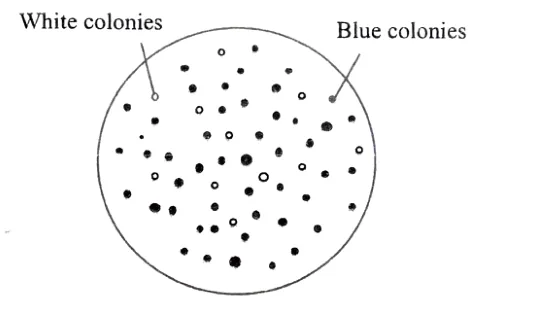
44. explain blue-white colony selection of recombinants
2×Board 2025Sample 20232/3 marks
The diagram given below shows a method of screening the transformed bacterial cells. Explain how the differently coloured colonies help in identifying the transformed cells.
45. name Thermus aquaticus as the source of Taq polymerase
2×Board 2023Board 20251 marks
Observe the relationship between the first two words / terms and then fill in the fourth word / term. Lipase: Candida lipolytica :: Taq polymerase: ______.
Biotechnology and its Applications
46. ELISA / PCR for molecular diagnosis and their principle
3×Sample 2023Sample 2025Sample 20271/2 marks
State the underlying principle of ELISA test.
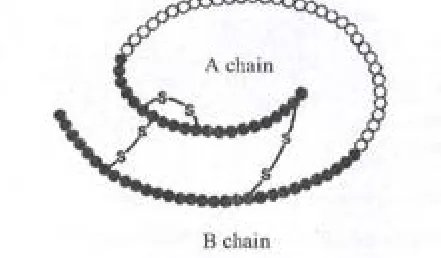
47. proinsulin to mature insulin processing and disulphide linkage
3×Board 2024Board 2026Sample 20231/3 marks
The diagram given below represents the schematic structure of proinsulin which undergoes certain modifications before it becomes a fully functional insulin. (i) State the change the proinsulin undergoes to become fully functional. (ii) Name the modern scientific technique used for the production of human insulin. (iii) How are the two polypeptide chains of the fully functional insulin held together?
48. gene therapy for ADA-deficiency SCID (disease, steps, limitation)
3×Board 2023Board 2024Board 20261/2 marks
Give a reason: Kanika was suffering from SCID and needed periodic infusion of transformed lymphocytes.
49. identify RNAi as the technique to silence pest genes
2×Board 2026Sample 20241 marks
Assertion: RNAi technique is applied to plants and animals to protect them from pest infestation.
Reason: This technique inhibits the expression of certain genes in pests.
(a) Both Assertion and Reason are true and Reason is the correct explanation for Assertion.
(b) Both Assertion and Reason are true but Reason is not the correct explanation for Assertion.
(c) Assertion is true and Reason is false.
(d) Both Assertion and Reason are false.
Organisms and Populations
50. calculate natality / mortality / density / growth rate from population counts
4×Board 2024Board 2025Board 2026Sample 20271 marks
A rural area has a population density of 150 individuals per sq. km. If the area is 250 sq. km, what will be the total population of the rural area?
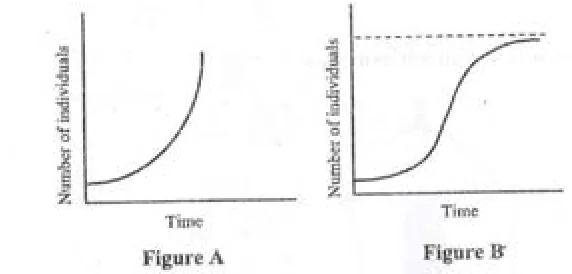
51. draw/interpret growth curve and give mathematical expression
4×Board 2024Board 2025Board 2026Sample 20273/5 marks
Study the two figures shown below that represent two growth models (Figure A, Figure B). (i) Which one of the two figures represents an unlimited supply of nutrients? Give a reason. (ii) Which figure depicts a challenge to population growth? (iii) Explain the term reproductive fitness. (iv) Give the mathematical expressions for Figure A and Figure B.
52. represent/explain the three types of age pyramids
3×Board 2023Sample 2026Sample 20271/3 marks
A survey was conducted to study the age structure of a human population. The data obtained is shown below: Adults 60,000; Children 35,000; Old 50,000. Based on the above data, identify the MOST appropriate shape of the age pyramid for this population.
(a) Pyramidal
(b) Triangular
(c) Urn-shaped
(d) Bell-shaped
53. calculate resultant population / growth rate from vital events
3×Board 2026Sample 2024Sample 20261/2 marks
Roselin had an aquarium at her home with 10 fish in it. In a year, a fish gave birth to 7 fish. During this period, 3 adult fish had died. Roselin's father purchased 2 more pairs of fish from market for the aquarium. Later, Roselin gifted 4 fish from the aquarium to her friend. Find out the growth rate of fish in Roselin's aquarium.
54. explain competitive exclusion / release (Gause's principle)
2×Board 2026Sample 20252 marks
Paramecium caudatum and Paramecium aurelia were growing in separate culture media in a laboratory. When both the species were transferred to the same culture medium for growth, it was observed that Paramecium caudatum got eliminated from the habitat after some time. Identify and explain the type of ecological interaction between the aforementioned species of Paramecia on the basis of Gause's principle.
55. explain types of parasitism with examples
2×Board 2025Sample 20243 marks
What is parasitism in population interactions? Explain any two types of parasitism with one example each.
56. name the interaction of an organism living on a tree (commensalism)
2×Board 2024Sample 20241 marks
Some orchids live on the branches of mango trees. Name the type of interaction that exists between mango tree and the orchid.
Ecosystem
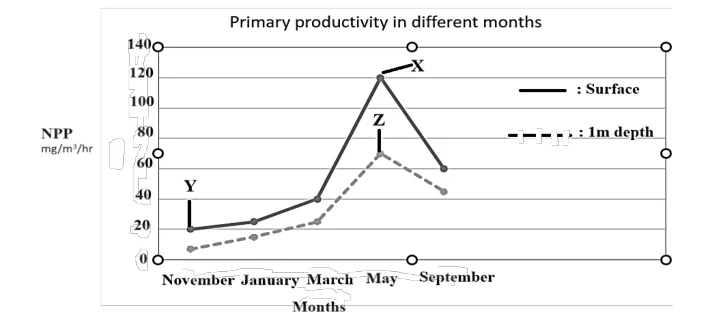
57. calculate GPP or NPP using GPP = NPP + respiration
4×Board 2025Sample 2023Sample 2024Sample 20271/2/3 marks
The following graph shows seasonal variations in Net Primary Productivity at the level of the surface and 1m depth in a marshy area of India during a study (X: peak in May at surface; Y: November at surface). (i) Account for the difference in primary productivity at points 'X' and 'Y'. (ii) The GPP of a terrestrial ecosystem is 2700 kg/m2/yr and 3/10th of its energy is used for respiration. Calculate the amount of energy available as NPP.
58. calculate energy at trophic levels using the 10% law
3×Board 2026Sample 2025Sample 20262/5 marks
The amount of energy at the fourth trophic level in the food chain given below is 4 J. Grass -> Zebra -> Crocodile -> Vulture. What will be the amount of energy available at the sunlight and transducer level?
59. draw a pyramid of numbers (tree-based, inverted)
2×Sample 2023Sample 20261/3 marks
Construct a pyramid of numbers for an ecosystem in which a single large aquatic plant supports a population of small herbivorous fish, which are consumed by a larger population of predatory fish such as kingfish.
60. Pyramid of biomass for a given food chain
2×Board 2023Sample 20271 marks
Construct an ecological pyramid of biomass for the following food chain: Grass → Deer → Fleas
61. R. Misra as the Father of Indian Ecology
2×Board 2023Board 20251 marks
Name the scientist who is considered the Father of Indian Ecology.
Biodiversity and its Conservation
62. name / explain in-situ and ex-situ conservation methods
3×Sample 2023Sample 2025Sample 20263/5 marks
During a field excursion, a group of class XII students visited Kaziranga National Park and observed efforts to protect the Indian rhinoceros in its natural habitat. They also toured a botanical garden and a gene bank, where they saw endangered plant species and preserved seeds. (i) Name and define the two types of conservation methods mentioned above. (ii) What is cryopreservation? (iii) Is Captive breeding an ex-situ or an in-situ strategy. Justify your answer with a reason.
63. explain the Rivet Popper Hypothesis
3×Board 2025Sample 2023Sample 20272/5 marks
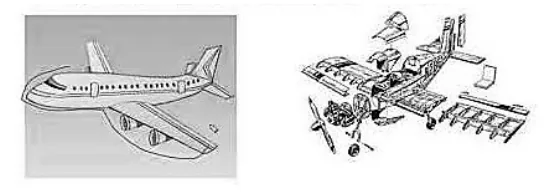
The image shown below represents an ecological hypothesis proposed by Paul Ehrlich. Study it carefully and answer the following question. Identify and explain this ecological hypothesis.
64. species-area relationship: calculate richness / give expression
3×Board 2024Board 2026Sample 20253 marks
A biologist surveyed islands of different sizes and consolidated the results. Name of Islands / Island Area (sq. km) / No. of mammalian species: P/1/5, Q/10/18, R/100/60, S/1000/150. (i) What pattern do you observe in the above data? (ii) Name the scientist who proposed the concept of relationship between area and species. (iii) Write the mathematical expression for this relationship.
65. explain the major causes of biodiversity loss (Evil Quartet)
3×Board 2023Sample 2024Sample 20252/3/5 marks
Name any two factors responsible for the loss of biodiversity in a geographical region.